
Al-Ula: Desert, Heritage, and the Unusual Landscapes of Saudi Arabia
Al-Ula combines monumental rock formations, historical sites, and desert landscapes. This destination showcases Saudi Arabia from a unique cultural and natural perspective.
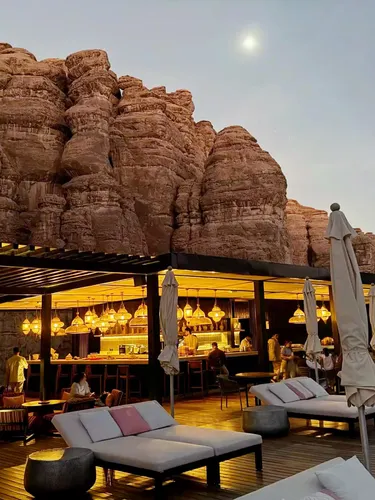
Al-Ula: A Place Where the Desert Keeps Memory
There are destinations that impress with their sheer number of attractions. And then there are places where the sheer space speaks louder than any list.
Al-Ula is exactly like that.
It's hard to immediately tell what's more impressive: the ancient structures, the enormous rock masses, the deserted silence, or the feeling of being in a landscape that needs almost no explanation.
At first it seems like you're going to see history.
Then you realize that history here is not separated from nature. It is literally carved in stone.
Roads run between cliffs. Old settlements stand next to deserted valleys. Archaeological sites emerge not as isolated museum objects, but as part of a vast expanse.
This is why it is better not to visit Al-Ula with the “see as much as possible” principle.
It needs to be lived more slowly.
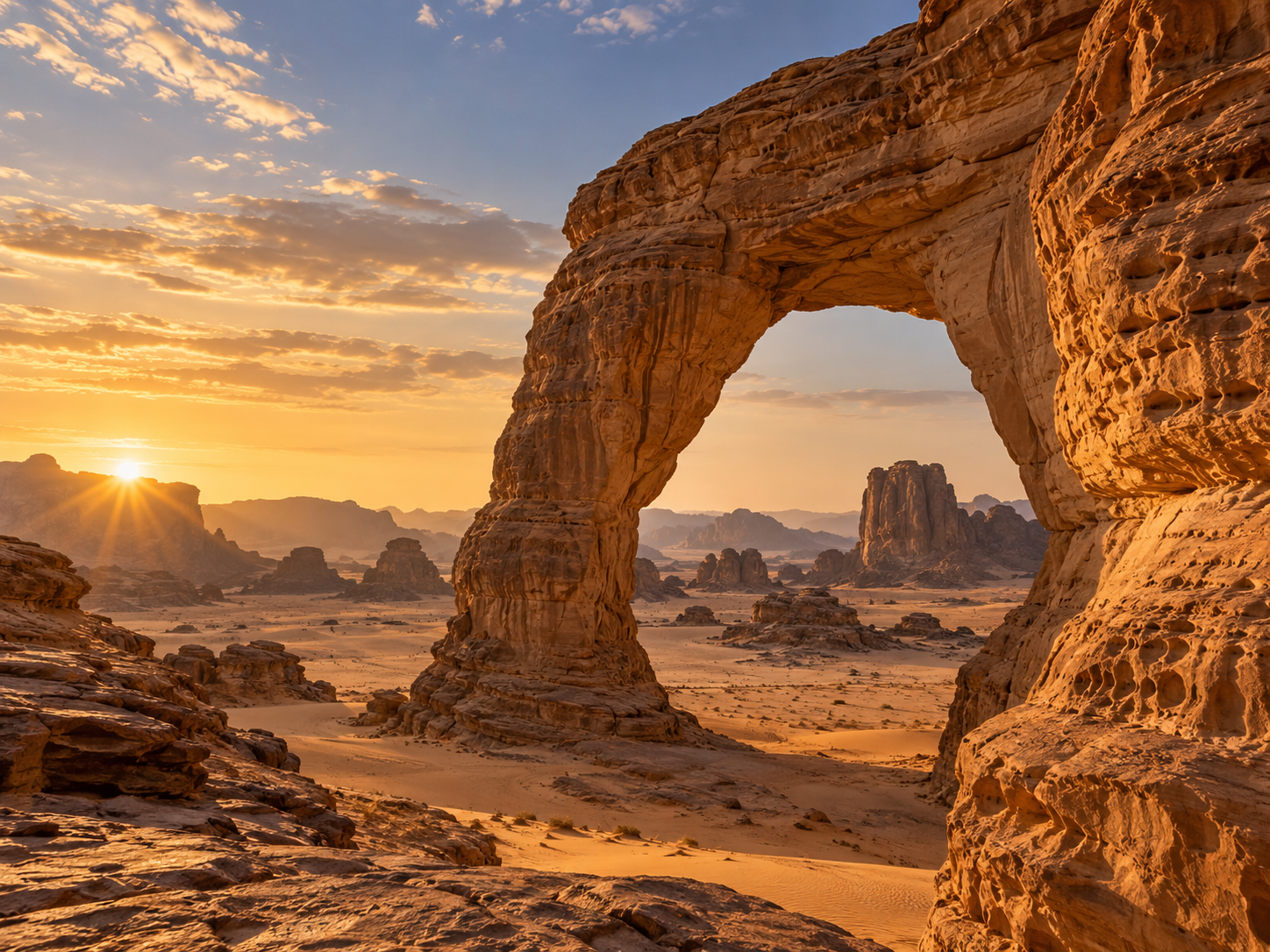
Hegra among the sandstone cliffs of Al-Ula. Here, history literally becomes part of the landscape.
Hegra: A Story Carved in Rock
The most famous place in Al-Ula is Hegra.
But photographs do not convey its scale well.
The photo shows the façade. In person, you immediately notice something completely different: the loneliness of these structures in the vast, empty space.
Monumental tombs are carved directly into the sandstone massifs. Some facades appear almost perfectly symmetrical, while others bear the marks of time.
But the contrast is especially powerful.
A smooth, carefully carved shape - and around it is rock, wind and desert.
You understand that trade routes once passed here, caravans moved, settlements existed, and cultures developed that the modern traveler usually knows very little about.
And suddenly the place ceases to be just an archaeological site.
It becomes proof that the desert was never empty.
Sometimes the silence of a historical place tells more about the past than a long excursion.
Old Town: When Scale Becomes Human
After the huge rock massifs, the historical part of Al-Ula is perceived in a completely different way.
Space is shrinking.
Narrow passages, walls, small houses, shadows and small squares appear.
This is no longer a desert-scale story.
This is the story of everyday life.
It's easier to imagine an ordinary person here: how he opened the door in the morning, walked between houses, met with neighbors, returned home after a hot day.
It is precisely such places that complement large archaeological sites well.
History is getting closer.
Not as an abstract antiquity, but as life that once took place on these streets.
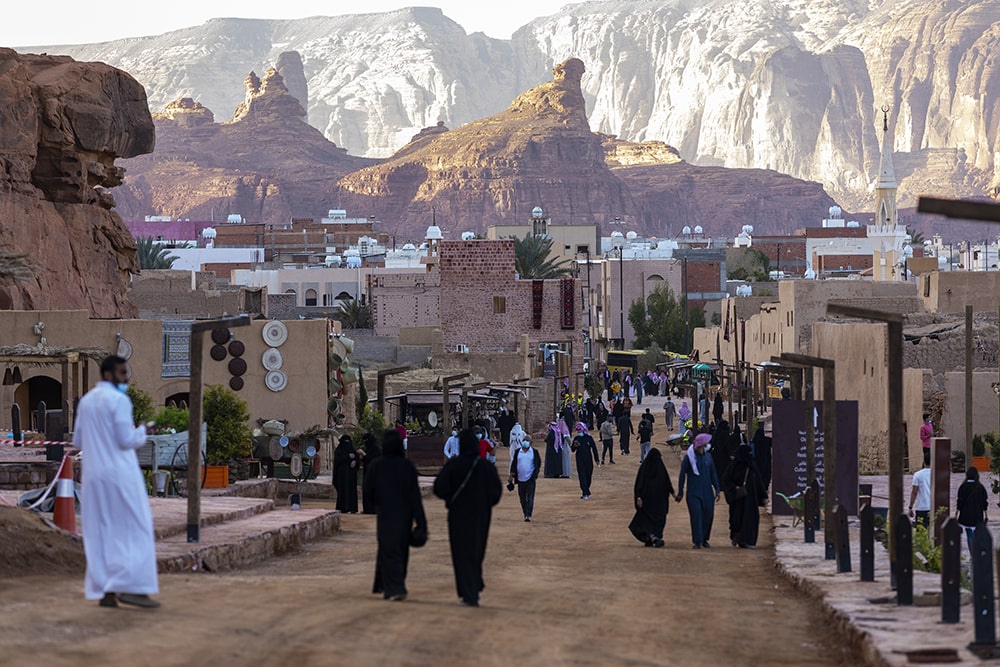
The narrow streets of Al-Ula's Old City. After the vast expanses of desert, history feels almost intimate here.
Oasis: A Green Pause Among the Stones
One of the most unexpected aspects of Al-Ula is its greenery.
After a long drive through sandstone, the eye hardly expects to see palm trees.
And then an oasis appears.
Date trees.
Gardens.
Green areas of land.
Shadow.
Water.
And the landscape changes dramatically.
This contrast helps us better understand why people have remained here for centuries.
An oasis wasn't a decoration for the desert. It was a necessity of life—a place to stop, grow food, rest, and then continue on.
Today, the green part of Al-Ula creates a completely different atmosphere.
Here you want to walk more slowly, stay in the shadows longer and watch how two opposites exist side by side - stone and plants.
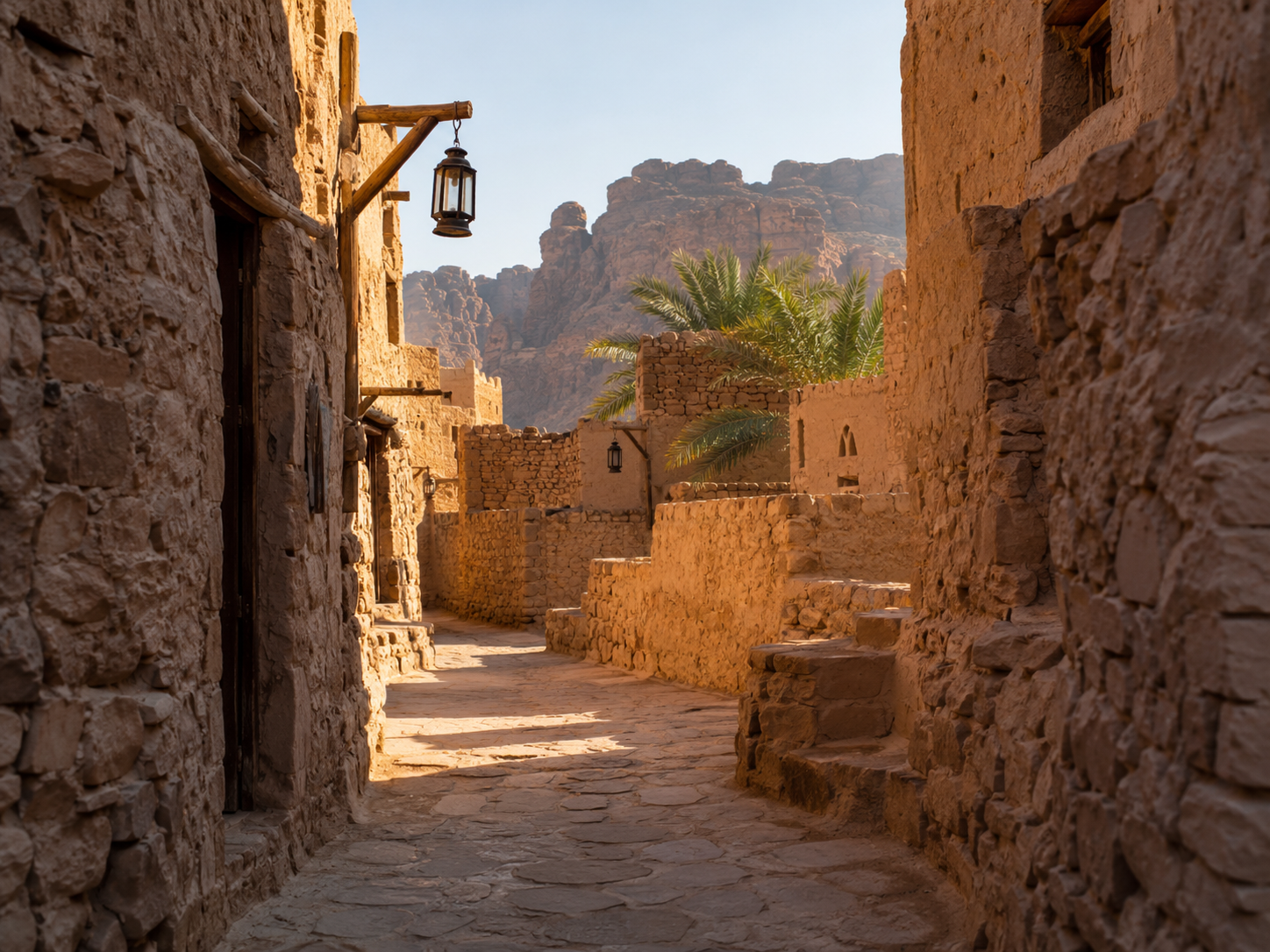
A palm oasis nestled among the cliffs of Al-Ula. It's precisely these contrasts that make the region so striking.
Rocks that change with the light
Al-Ula is not particularly beautiful at midday.
Her time is early morning and the last hours before sunset.
As the sun sinks lower, the relief deepens. Long shadows appear. Individual rock outcrops suddenly become more visible.
The color changes from sand to copper.
And a familiar place looks completely different.
Therefore, it makes sense to build the day not only around the route, but also around the world.
The most expressive natural locations are best left for the morning or evening.
During the day – historical spaces, an oasis, relaxation.
Closer to sunset, there is a desert again.
This makes the journey feel more natural.
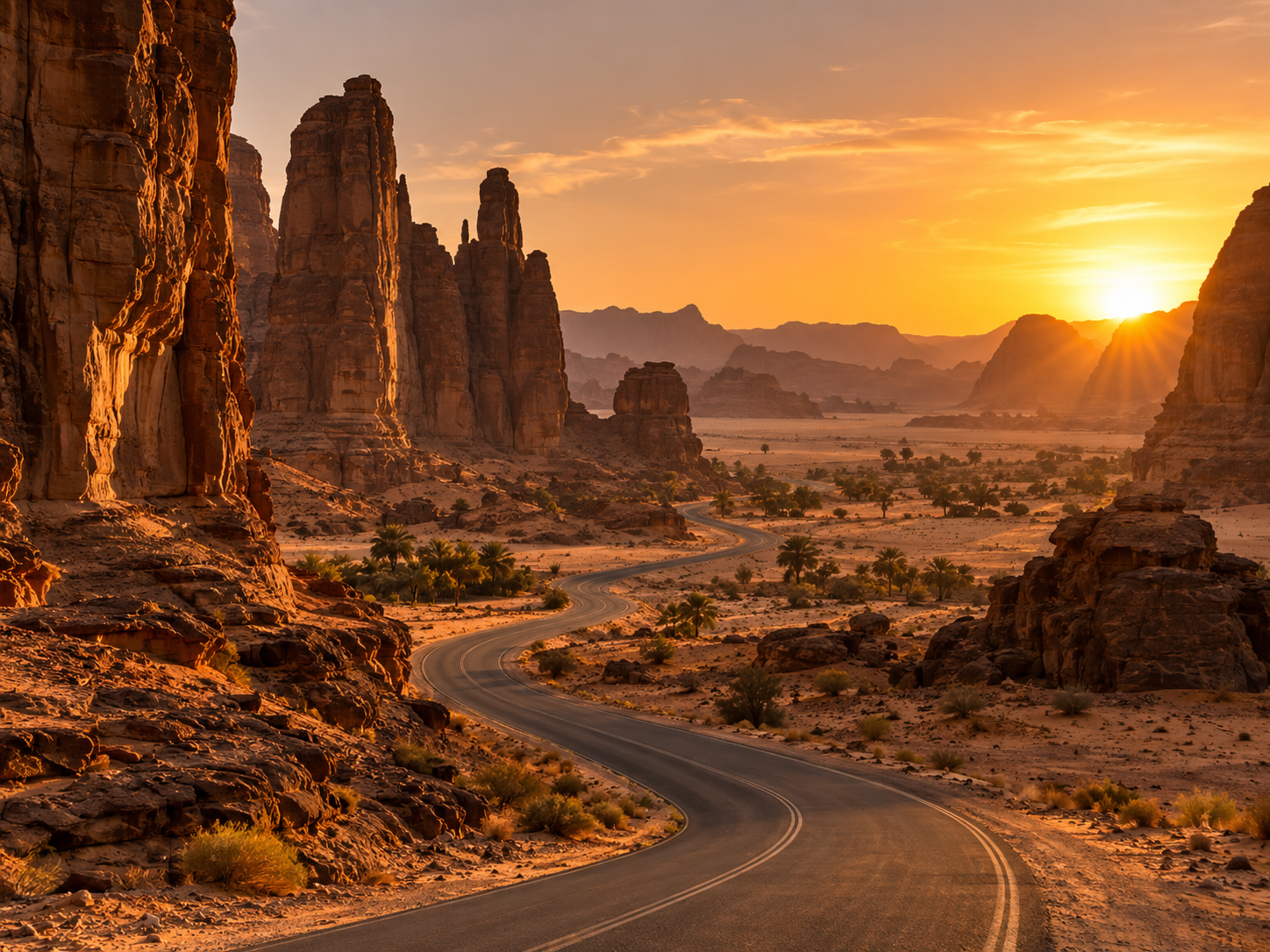
Al-Ula rock formations at golden hour. The evening light transforms the desert into a constantly changing landscape.
There is no need to try to overcome distances
A big mistake in places like these is to treat distances as an obstacle.
I would like to reduce travel.
Get more done.
Add one more point.
But Al-Ula teaches just the opposite.
The road here does not take time.
It is part of the trip.
You can drive for twenty minutes and watch the landscape change the whole time.
You can stop simply because the light falls beautifully on the rock.
You can spend half an hour where there was nothing planned.
It's these kinds of deviations that often make a journey real.
Evening in the desert
As the sun sets below the horizon, Al-Ula becomes even quieter.
The temperature is dropping.
The stone darkens.
The sky gradually loses color.
And the space that seemed enormous during the day begins to feel almost endless in the evening.
This is the moment when it is especially good to just stop.
Without the next point.
Without the need to explain anything.
Travel suddenly ceases to be a task.
Becomes a state.
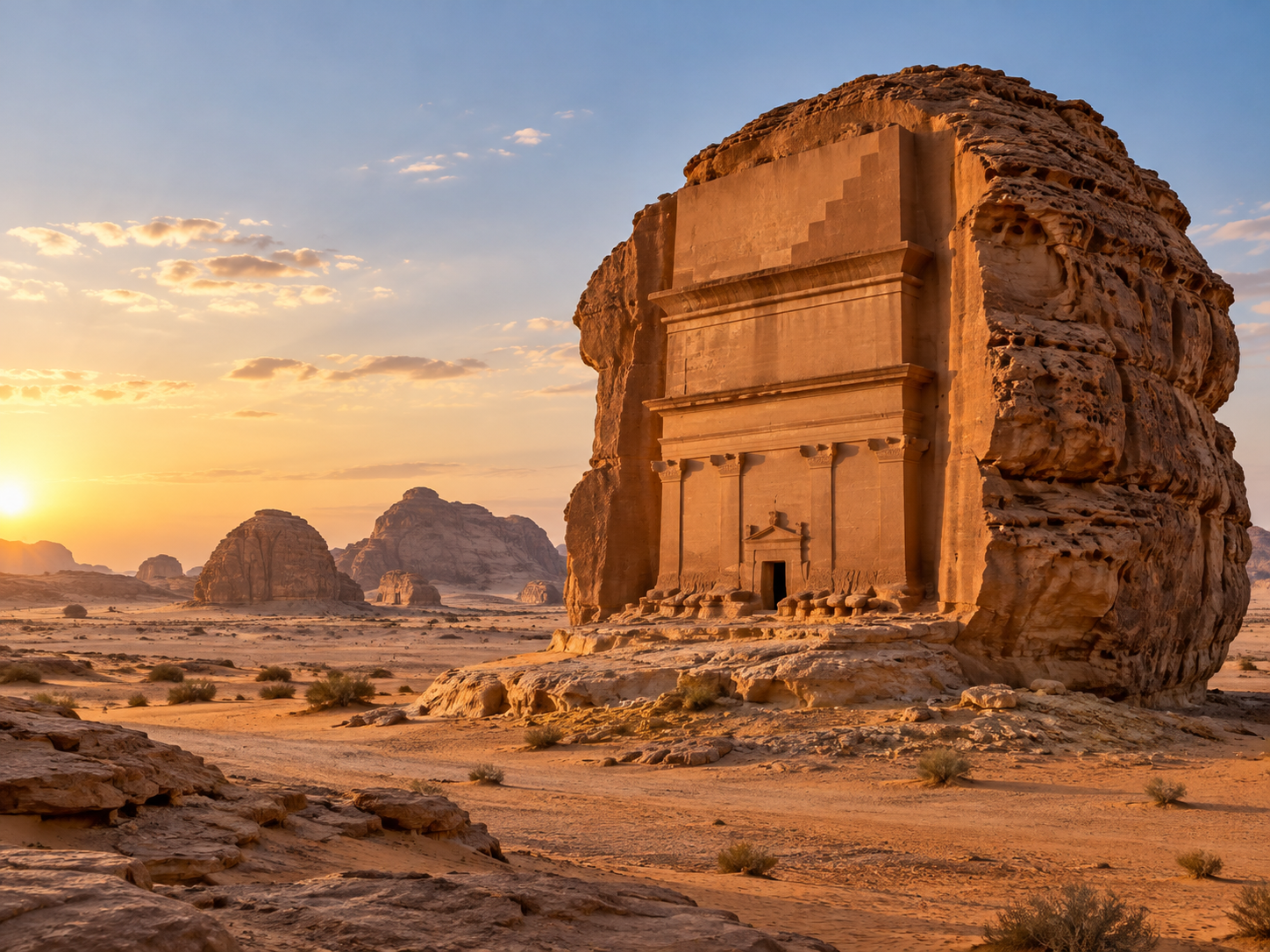
The last light over the Al-Ula desert. Sometimes the most important impression of a trip comes just when the day's program is over.
Why it's especially good to slow down here
In Al-Ula, there is little point in living by a minute-by-minute schedule.
Too many things depend on light, temperature, distance and general conditions.
Sometimes you want to linger at one rock longer.
Sometimes it's worth giving up another point for the sake of a quiet evening.
And this does not mean that the day was ineffective.
Vice versa.
This rhythm helps you feel the place more deeply.
Traveling is not always meant to give a person more experiences.
Sometimes it is more valuable when it makes less noise.
What remains after Al-Ula
After a trip, you rarely remember only names.
Hegra.
Old town.
Oasis.
Rock formations.
Sensations remain in memory.
How the stone changed color before sunset.
How far the horizon could be seen.
How quiet it became in the evening.
How unexpectedly greenery appeared in the middle of the desert.
How little I wanted to speak at some point.
Al-Ula does not try to impress with a continuous flow of events.
She does something else.
She gives a person space.
And sometimes it is the space that becomes the most valuable impression of travel.
Comments
Share your thoughts