
Bali: An Island Worth Seeing from Every Side
Bali is more than just beaches. Temples, rice terraces, volcanic landscapes, small villages, and the coastline allow for completely different itineraries across the island.
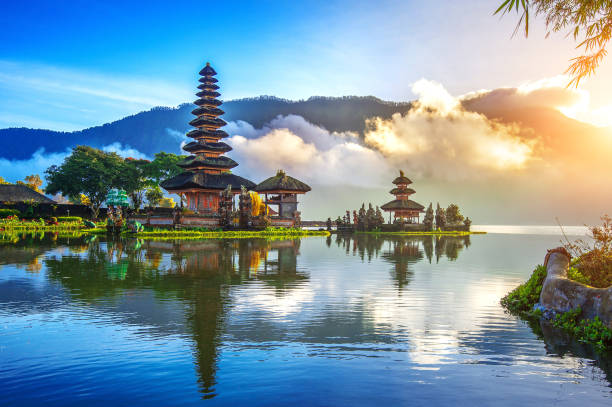
Bali: The Island That Reveals Itself When You Stop Looking for Just Beaches
There are directions that we can already imagine using a few familiar pictures.
Bali is one of them.
Ocean. Palm trees. Sunsets. Hotels by the water.
But once you move away from the coast and into the interior of the island, this perception begins to change quickly.
The road climbs higher. Rice fields appear between the houses. Temple gates appear behind the trees. The air becomes cooler. Volcanoes appear on the horizon.
And at some point it becomes clear: Bali is interesting not because you can combine the beach and excursions here.
It is interesting because on a relatively small island the very feeling of travel is constantly changing.
Today is the ocean.
Tomorrow is the temple ceremony.
The day after tomorrow - a road among rice terraces.
And a day later - dawn in the mountains.
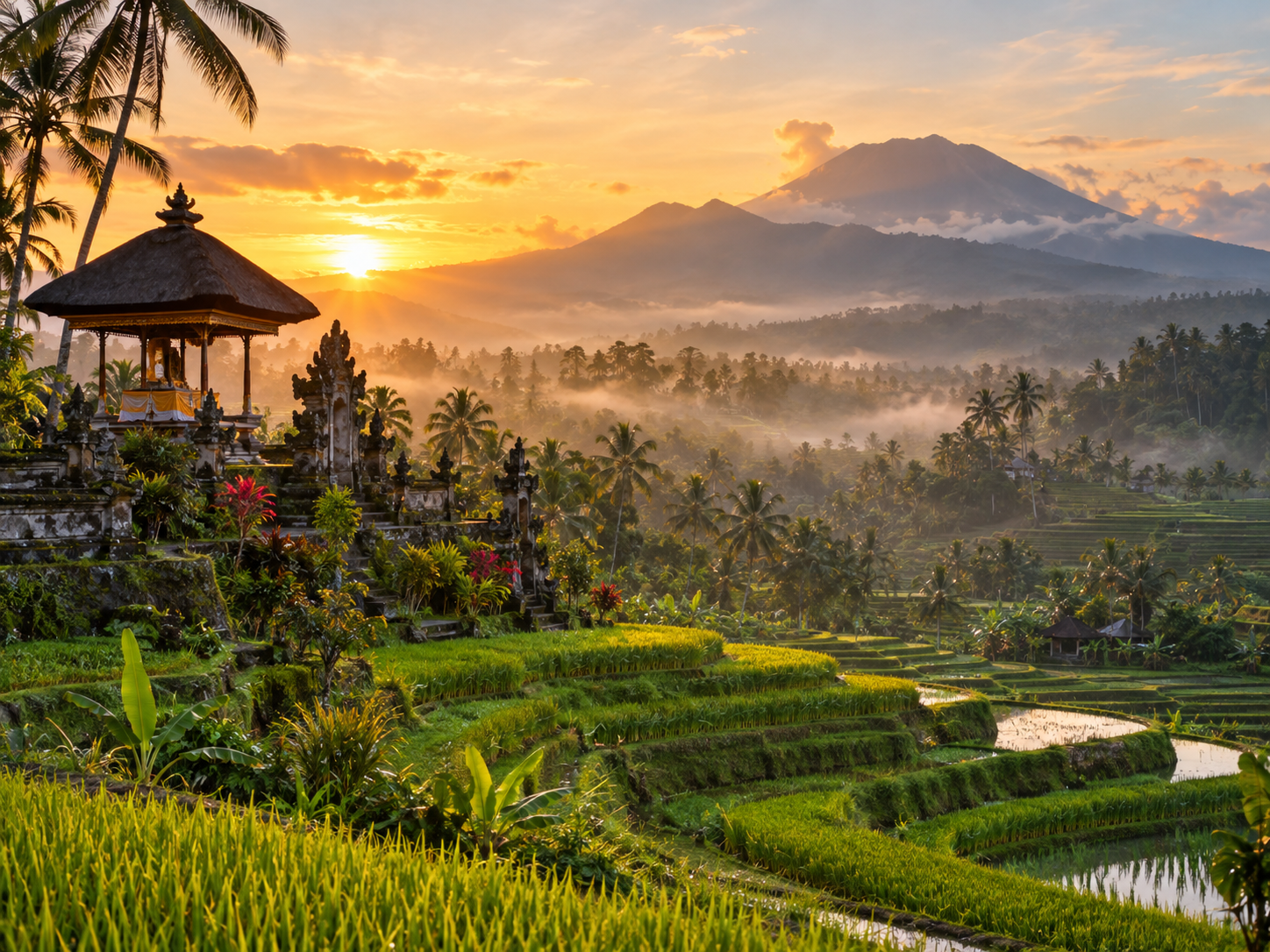
A temple, rice terraces, and a volcanic silhouette at dawn—three different faces of Bali in one landscape.
Ubud: Where Bali Gets Quieter
Ubud is often referred to as the cultural centre of the island.
But its main difference is felt not only in one museum or temple.
It can be felt in the rhythm.
Mornings here begin differently than in the bustling areas of the southern coast. The streets have less of a resort feel and more of a sense of everyday life.
Small workshops open next to cafes. Traditional offerings lie at the entrances. Music can be heard somewhere. Along the way, you might encounter a person carrying a basket to the temple, and a few minutes later, you'll find yourself surrounded by modern restaurants and shops.
This contrast does not appear artificial.
Old and new exist here simultaneously.
And that's why it's best not to think of Ubud as a place you just need to visit for a few hours.
I'd like to linger here.
Walk along the small streets.
Sit in the shade.
Turn in a direction you didn't initially intend to go.
Look not only at the sights, but also at how everyday life is organized around them.
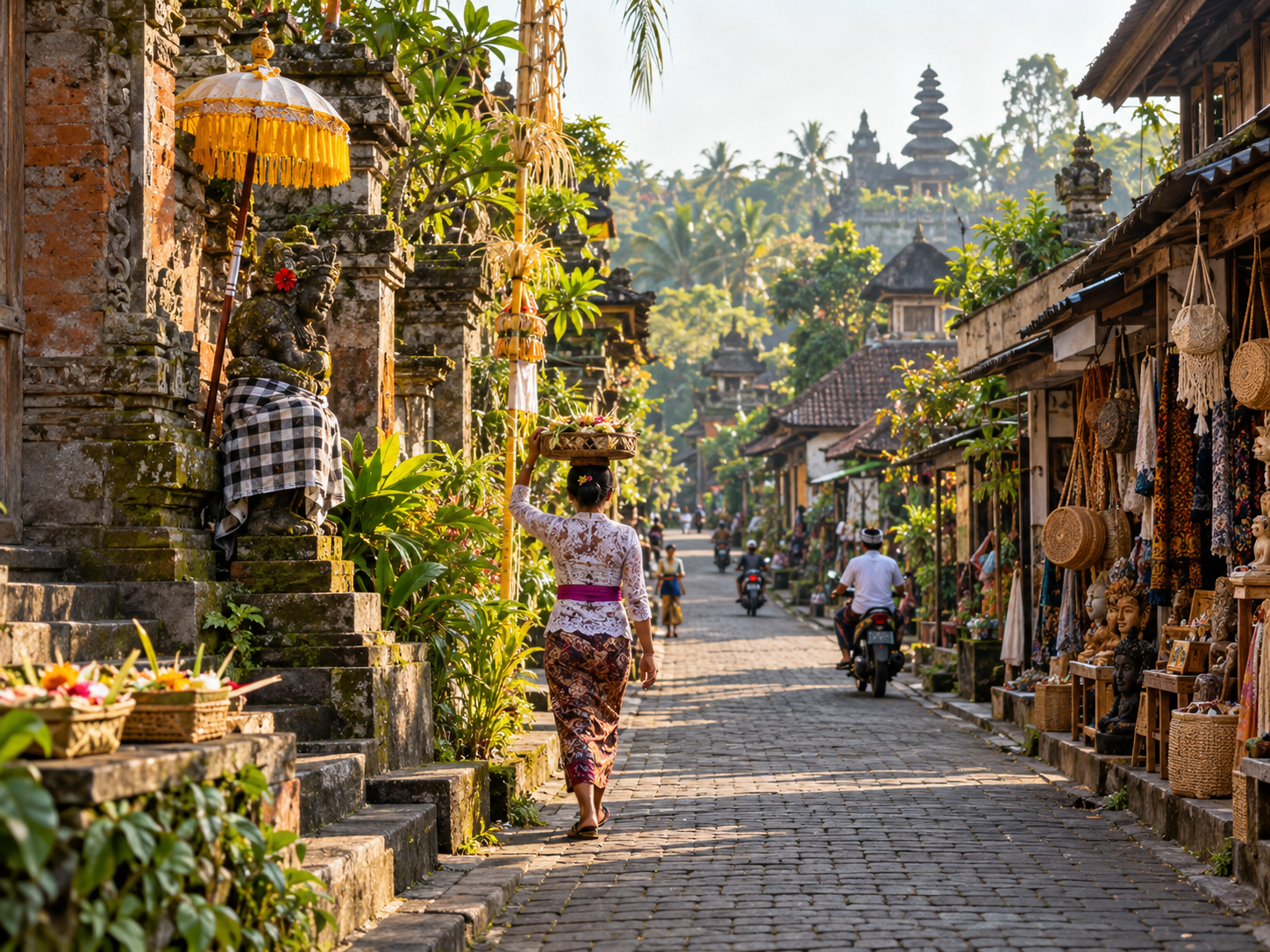
Morning in one of the Balinese settlements: temple architecture, traditional clothing and everyday life exist side by side here.
Temples that are not separate from life
In Bali, a temple doesn't always feel like a separate point on the route.
Sometimes it is literally built into the street.
Sometimes found near houses.
Sometimes hidden among the greenery.
Stone gates, dark roofs, statues, fabric, flowers and offerings create the very image of the island, which is easily recognizable even without a signature.
But something else is more important.
The temples here are not decorations for tourists.
They remain part of religious and social life.
And this changes the attitude towards visiting.
I want to go slower.
Speak more quietly.
Don't perceive what is happening around you as a performance.
If a ceremony is taking place in a temple, it is best to first understand where visitors are allowed to be and what is acceptable to photograph.
Some places require a sarong. Sometimes they're provided at the entrance.
These rules may seem like small things, but respecting them is what turns a trip from a simple sightseeing trip into a true introduction to another culture.
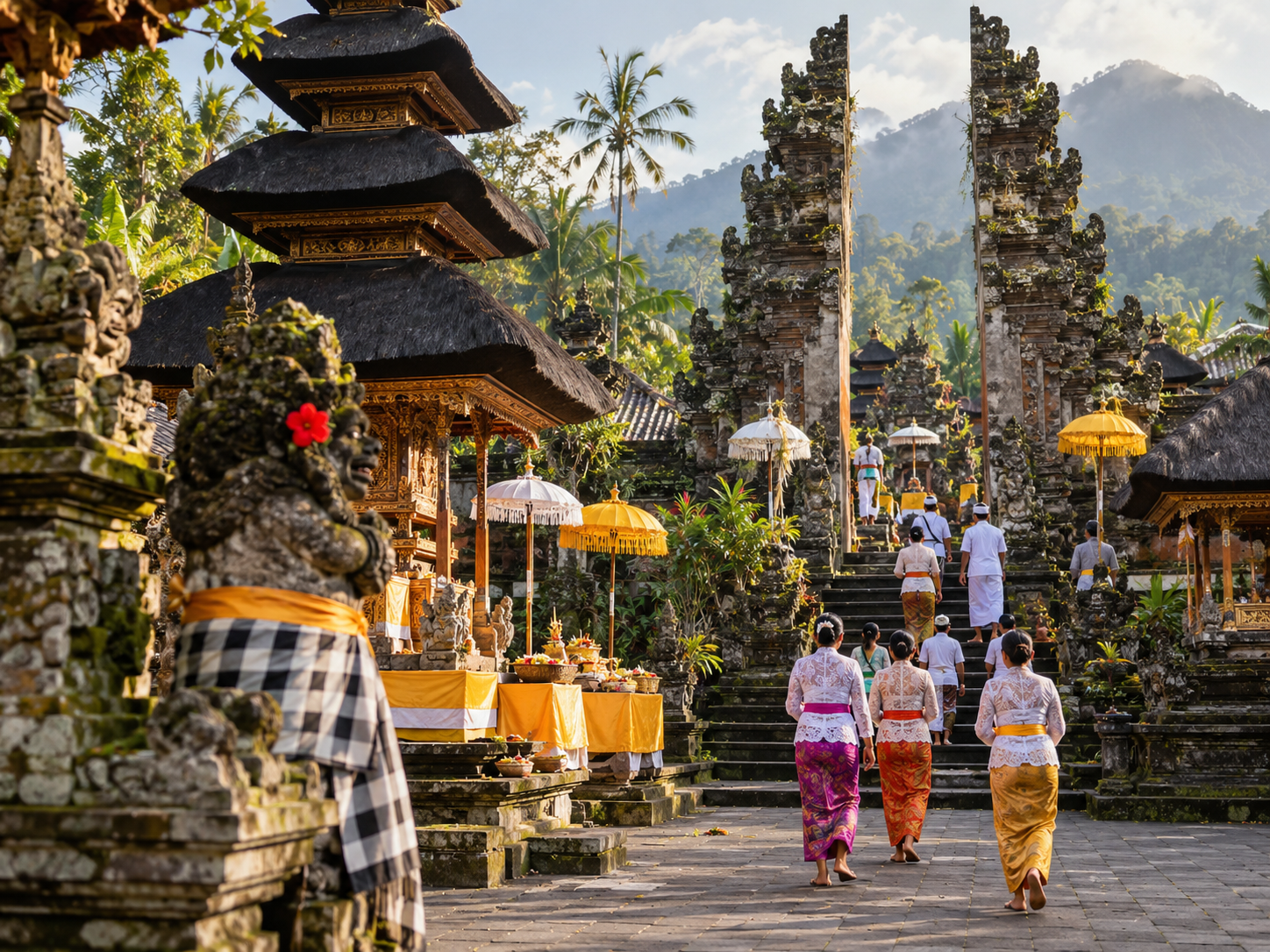
A Balinese temple on a typical day. Even the most beautiful complexes here remain, first and foremost, vibrant religious spaces.
Rice Terraces: A Landscape Created by People
The rice terraces are often considered one of the most beautiful photo locations in Bali.
And it's true.
Especially in the morning, when the light is still soft, the water reflects the sky, and green steps lead down the slope.
But such a landscape does not exist for the sake of photography.
This is working land.
The fields are cultivated, water is distributed between plots, the harvest depends on the season, weather and the work of people.
When you look at the terraces from the road, it's easy to see only a beautiful pattern.
When you walk along them, your attention switches to details.
Water in small canals.
Rustling of plants.
People in the fields.
Homes far away.
Volcanic silhouette over the valley.
And then the landscape ceases to be just a postcard.
It becomes part of a living system.
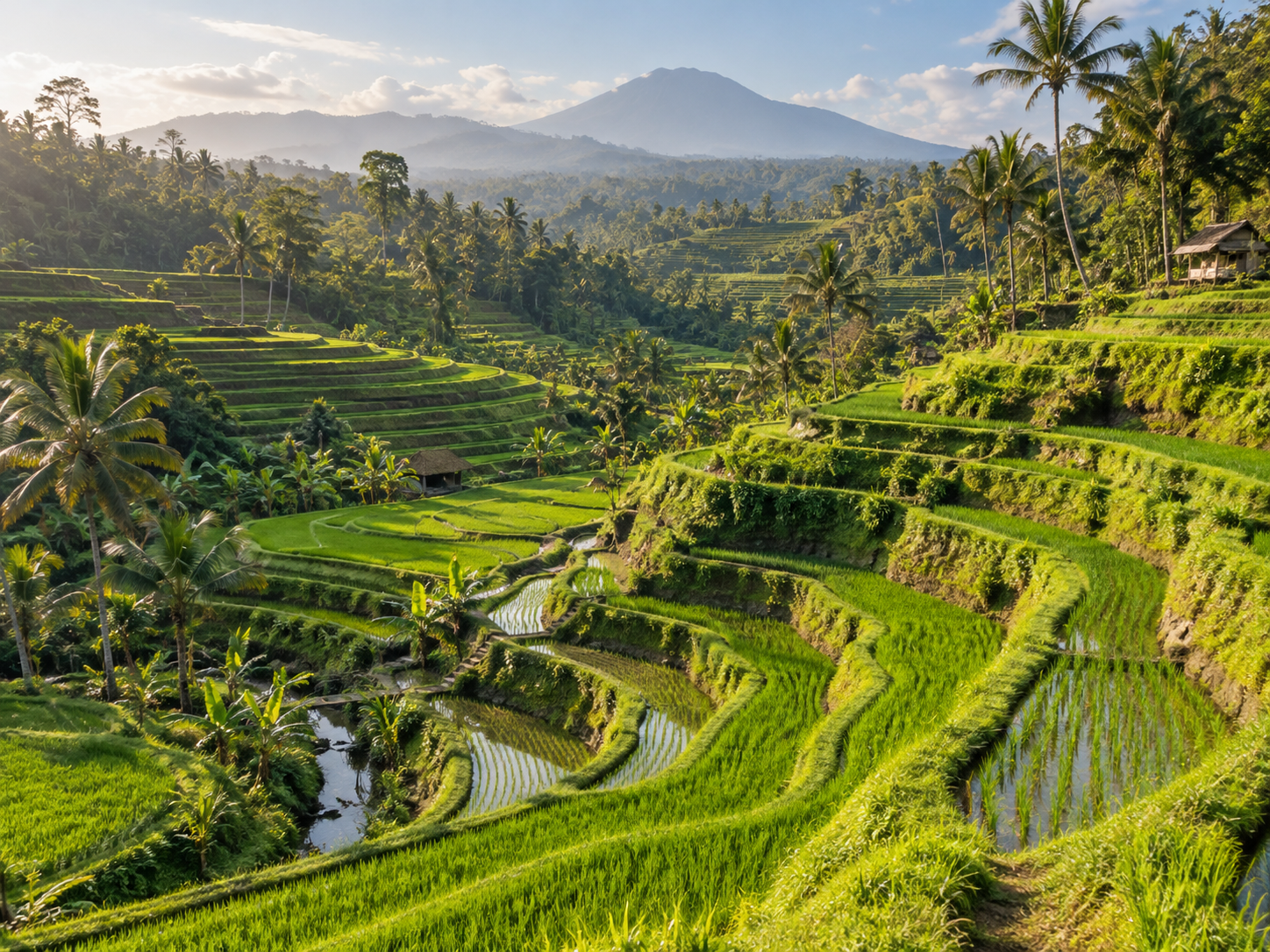
Rice terraces in the interior of Bali. Their beauty is especially noticeable when you see them not as decoration, but as part of the island's rural life.
Sometimes the best impression of Bali doesn't come from the most famous spot, but on the road between two places, when a valley suddenly opens up and you just want to stop.
Road to the Ocean: A Completely Different Island
After the central regions, the coast feels almost like a change of country.
It's getting hotter.
The air is changing.
A salty wind appears.
And the most interesting thing is that the coastline of Bali doesn’t look the same either.
Somewhere the beaches are long and open.
Somewhere the shore becomes rocky.
There are bays that seem almost closed off from the outside world.
There are places where the main thing is surfing.
And there are areas where you want to come just for an evening walk.
Therefore, the phrase “vacation in Bali” says almost nothing about the actual trip.
You can spend a week next to a bustling beach.
Or you can live on a completely different coast and see the ocean only from a small bay between the rocks.
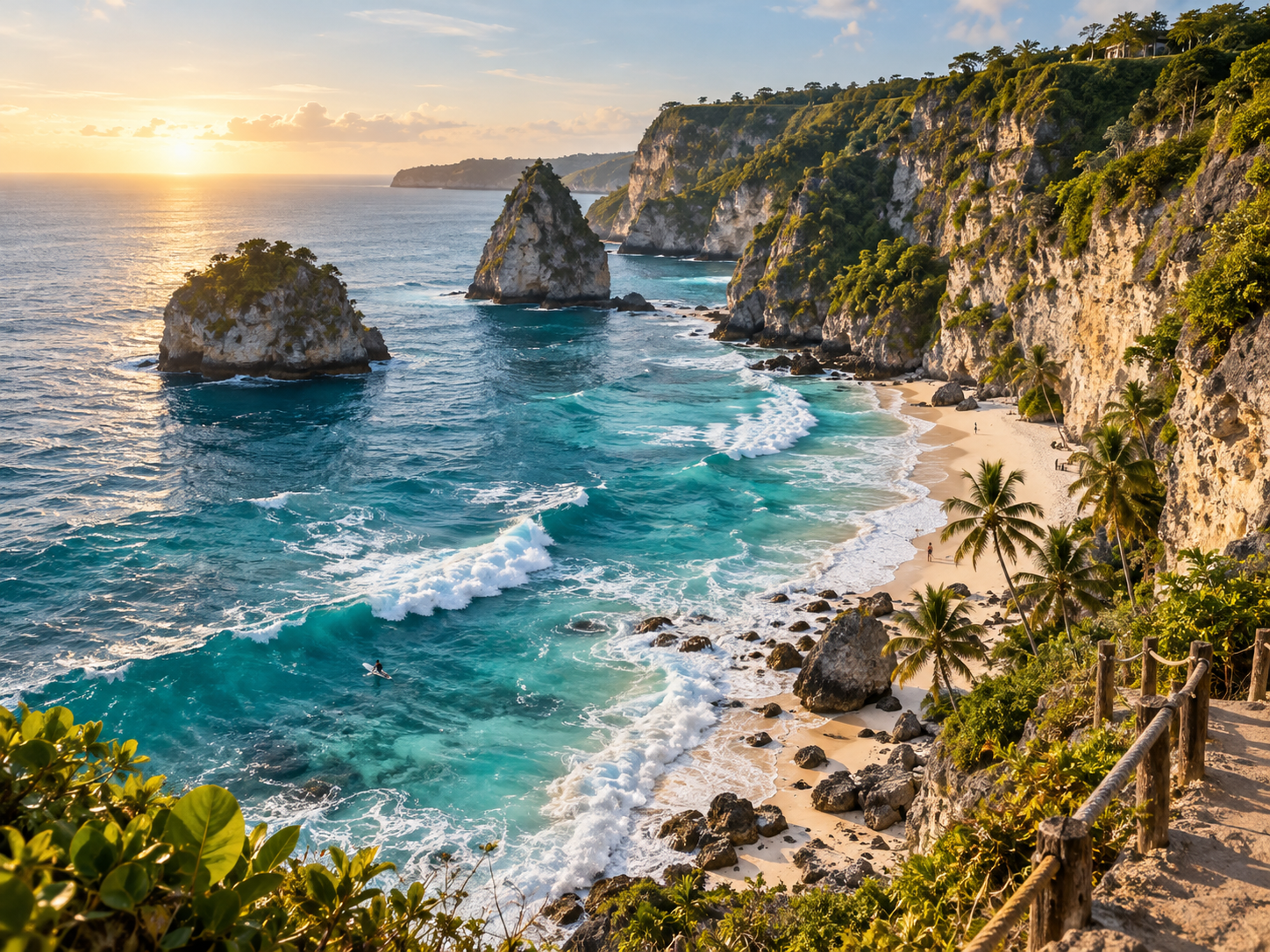
Bali's rocky coastline at sunset. The ocean here can look completely different from the typical resort photos.
Why you shouldn't live by the sea all the time
For your first trip, it's tempting to choose one hotel and travel around the island from there every day.
On the map it seems reasonable.
But Bali knows how to deceive with distances.
The journey may take much longer than expected.
Traffic, narrow streets, turns, and climbs in the central part of the island—all of this quickly turns the day into a series of trips.
Therefore, it is more interesting to divide the island into several stages.
For example:
coast → Ubud and central part → east or north → ocean again.
Then each place feels not like a round trip, but like a separate chapter of the journey.
The view from the window changes.
The temperature changes.
Even the daily routine changes.
And this is precisely what helps to switch off more deeply from everyday life.
Volcanoes: Bali You Don't Expect to See
The interior of the island reminds us that Bali was formed by volcanoes.
This is especially noticeable early in the morning.
The sky is still dark.
It's cool at altitude.
There are clouds below.
Then the first streak of light appears, and mountain silhouettes begin to emerge from the darkness.
From these points the island looks completely different.
There are no beaches.
There are no cafes by the ocean.
There is no usual resort image.
There are only mountains, a lake, forests and a huge horizon.
And it is here that you get a particularly good sense of the island’s scale.
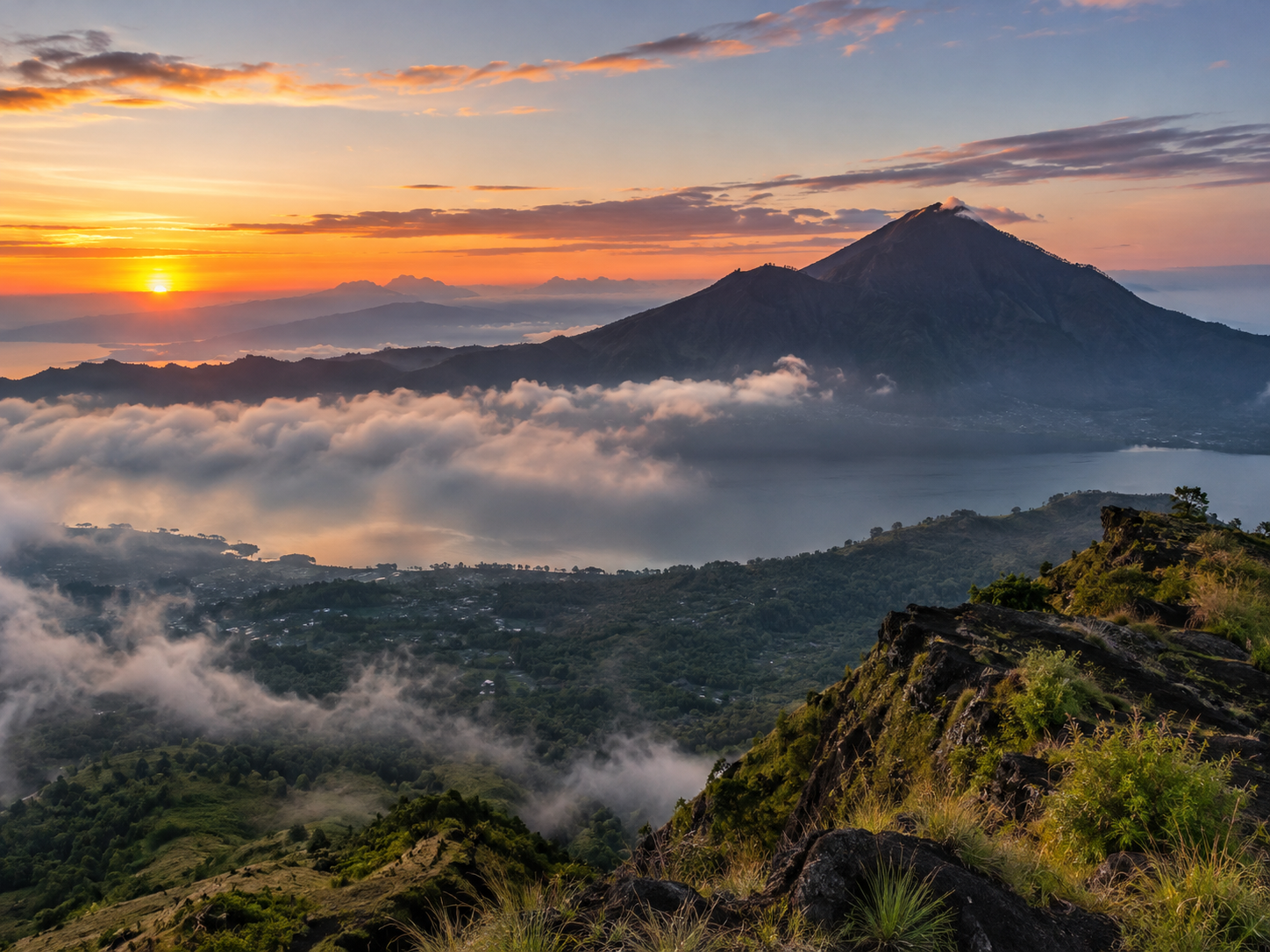
Dawn over Bali's volcanic region. At altitude, the island reveals a completely different side—cool, quiet, and almost austere.
Sometimes relaxation doesn't start when you do nothing.
We often imagine recovery as very simple: lying down by the water, turning off the phone and not planning anything.
Sometimes it really works.
But there is another type of rest.
When you are physically tired after a walk, your head becomes lighter.
When you get up early for the sunrise, but the whole day feels longer and more fulfilling.
When you see so much new in just a few hours that your work thoughts fade into the background.
Travel changes the environment.
And along with the environment, attention changes too.
Instead of the usual tasks, a person begins to notice the light between the trees, the smell of rain, the sound of the ocean, the cold of the morning air in the mountains.
It's not a magic solution to all problems.
But sometimes this kind of switch is exactly what is needed to feel more collected and calm.
It's better not to try to see all of Bali at once.
There are too many different routes on the island to put them all together in one list and follow it.
If you try to see another temple, another waterfall, another terrace and another beach every day, the impressions begin to mix.
Bali is at its best when there is space between events.
Morning without a program.
A lunch that lasts longer than planned.
A walk down an unfamiliar street.
An evening by the ocean without having to go further.
Therefore, a good route is not the most crowded route.
The best route is one that allows a person to not only see the island, but also feel how their own rhythm changes.
What remains after Bali
Of course, there are photographs left.
Temples.
Rice terraces.
Ocean.
Volcanoes.
Sunsets.
But after some time, memory begins to store completely different details.
The road after the rain.
The silence of the early morning.
Warm air in the evening.
A small temple on the street, which I passed by at first almost without noticing.
A field near which the driver unexpectedly stopped for several minutes.
And perhaps this is what distinguishes a real journey from a trip through a list of attractions.
You come for the famous places.
And you take with you moments that weren’t even in the plan.
Bali is especially good for this.
At first it seems like the island needs to be seen.
And then you realize that it’s much more interesting to let it open up gradually.
Comments
Share your thoughts