
Malang: a city of cool mornings, old streets, and roads to the volcanoes of East Java
Malang is a green city in East Java with a cooler climate, old architecture, quiet neighborhoods, and a convenient location between Surabaya, Bromo, and the mountain trails. It's a great place to stop, slow down, and see a different side of Java after a busy volcanic journey.
After Bromo, Malang feels almost unexpected.
Just a few hours ago, there was volcanic sand, pre-dawn chill, jeeps and an open caldera all around.
And here are the trees.
Cafe.
Old houses.
Quiet streets.
And the air seems cooler than you'd expect from tropical Java.
Malang does not require the traveler to immediately run somewhere.
Perhaps this is why it is so well suited as a stopover between busier points on the route.
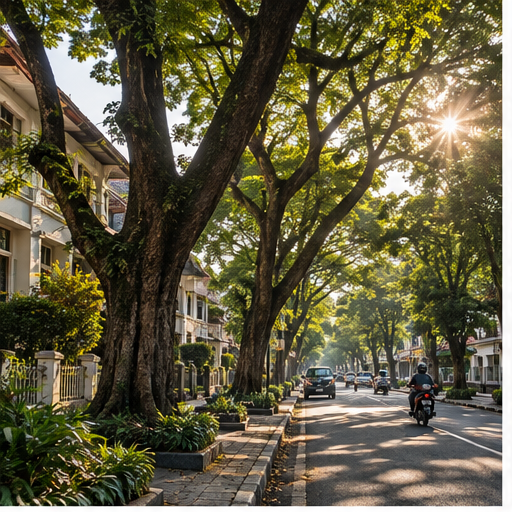
Mornings in Malang begin calmly: cool air, long shadows from the trees, and streets that have not yet filled with the day's traffic.
A city where you want to walk slower
After Surabaya the contrast is especially noticeable.
Malang feels less like a metropolis.
It's easier to spot a separate street here.
House.
Yard.
A small cafe.
Pedestrian on the sidewalk.
The city is still vibrant and bustling, but its sheer scale allows you to sometimes forget about the traffic.
Especially in the morning.
At this time, some areas of Malang seem almost unexpectedly intimate.
Coolness as part of character
Altitude has a significant impact on the feel of a city.
Mornings and evenings can be much more comfortable than in the lowlands of East Java.
After hot cities or driving through volcanic landscapes, this difference is especially noticeable.
It is no coincidence that the mountainous regions around Malang have long attracted people precisely because of their climate.
It's easier to walk here.
It's easier to linger outside.
It's easier to get through the day without constantly searching for air conditioning.
Traces of another time
Malang still has streets and buildings that recall the period of Dutch presence in Java.
Some areas are characterized by wide streets, large buildings and lots of greenery.
This is not a single museum quarter.
Old architecture is integrated into a modern city.
There may be an ordinary store next to the historical façade.
Behind the old villa there is a new development.
Motorcycles pass along the road.
And it is precisely this proximity that makes the walk interesting.
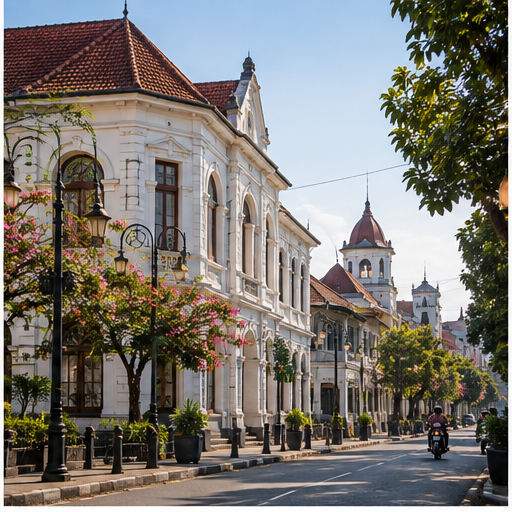
Old architecture here is not separated from everyday life: historic houses continue to exist within the modern city.
Color where you don't expect it
One of the region's most unusual visual images involves small residential areas that have been given a vibrant color treatment.
At home.
Stairs.
Walls.
Bridges.
Narrow passages.
Everything turns into an almost graphic composition.
In photographs, such places can look like specially created tourist scenery.
But behind the bright facades, ordinary life remains.
Families live here.
Clothes are drying.
The children go about their business.
People are talking near houses.
Therefore, it is important to remember that this is primarily a residential area.
The traveler is a guest here.
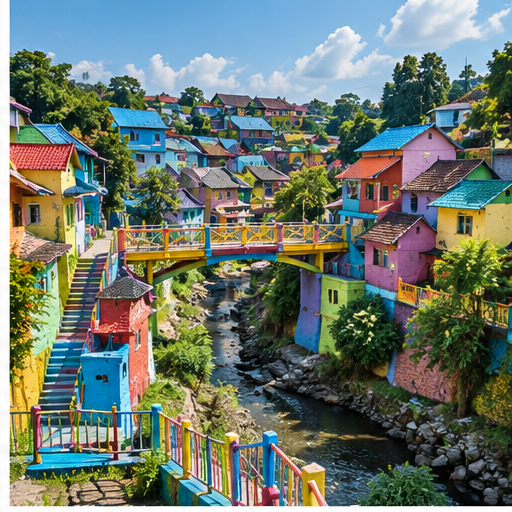
Colourful neighbourhoods change the familiar image of the city, but behind the bright walls, ordinary everyday life continues.
The city through a cup of coffee
Malang is perfect for those days when you don’t want a full excursion program.
You can simply choose a cafe.
Sit by the window.
Order coffee.
Look at the street.
And there is no hurry.
In Java, coffee culture has long been a part of everyday city life.
Modern coffee shops stand side by side with simple local establishments.
Sometimes the interior is thought out down to the smallest detail.
Sometimes everything is much simpler: a few tables, a fan and a cup of strong coffee.
Both options are useful for traveling.
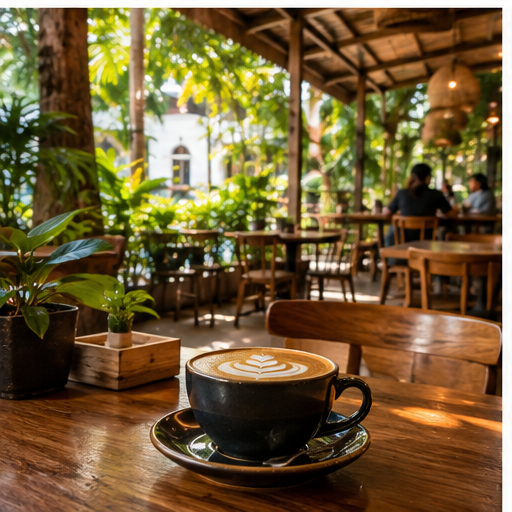
Sometimes the best way to experience Malang is not to look for the next attraction, but to simply spend an hour with a coffee and watch the street life.
Eating without ceremony
In the city, you don't have to look for an expensive restaurant to have a good meal.
Often the most interesting dishes are found in simple warungs – small local establishments.
Rice.
Soup.
Noodles.
Fried dishes.
Sambal.
Small portions of various additions.
The menu may be short.
The interior is very ordinary.
But it is precisely these places that often become part of the true Java experience.
It's helpful to look beyond traveler reviews.
Sometimes it's more important to see where the locals dine.
Malang after Bromo
For many travellers, Malang works particularly well after the Volcano Route.
The journey to Bromo usually starts at night.
The dream is short.
The morning is eventful.
Dust, cold and the road accumulate fatigue faster than it seems.
Therefore, after returning, it is not necessary to immediately move on.
Malang allows you to stop.
Take a shower.
Eat normally.
Get some sleep.
Take a walk in the evening.
And let the impressions settle in a bit.
When traveling, such breaks are sometimes more important than another item on the program.
The station as the beginning of the next chapter
In Java, the train is not only a means of transportation.
It often becomes part of the journey itself.
Malang is conveniently connected by rail with other cities on the island.
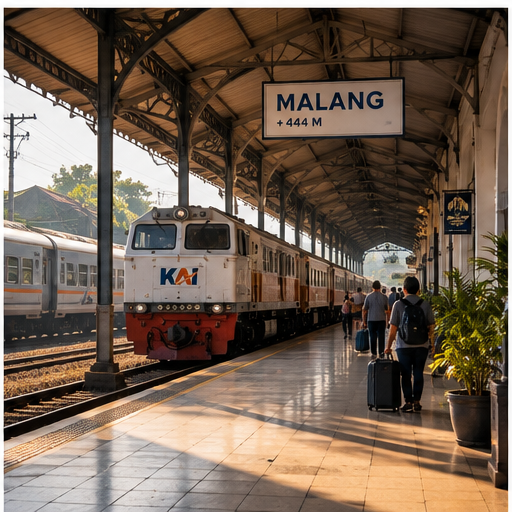
Morning at the station has its own rhythm.
Suitcases.
Glasses of coffee.
Announcements.
People who are returning home or moving on.
Gradually the train appears.
And the city remains outside the window.
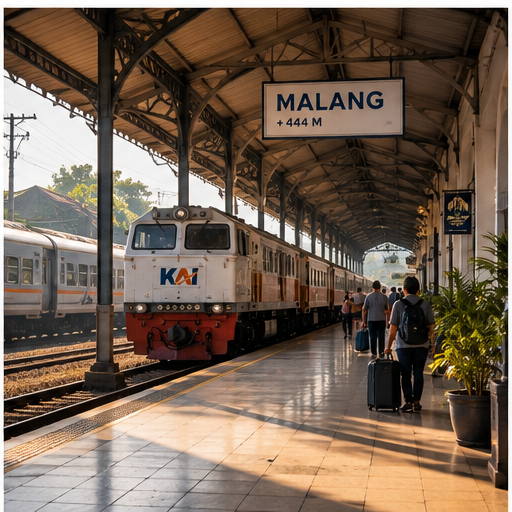
The station is a reminder of Malang's role on the Java route: for some it is the final destination, for others a short stop before the next journey.
Outside the city, another Java begins
Once you leave the densely populated areas, the landscape changes again.
The mountains are getting closer.
Rural roads appear.
Fields.
Small villages.
The relief gradually rises.
And then it becomes clear why Malang is so closely connected with the nature trails of East Java.
The city itself is not a volcanic park.
But volcanoes are always present somewhere nearby – on routes, on the horizon, and in conversations about where to go next.
Don't make Malang just an overnight stay
The simplest diagram looks like this:
arrive in the evening,
spend the night,
leave in the morning.
She works.
But in this case, the city hardly has time to appear.
If possible, it's worth adding at least half a free day.
Not for the list of attractions.
And for the sake of the city itself.
Take a walk.
View old neighborhoods.
Have lunch.
Drink coffee.
Return to the hotel without feeling like the day was wasted.
Sometimes a trip needs just such a day.
The evening when the city gets warmer
As the evening approaches, the green streets gradually become darker.
Signs are turned on.
Small food stalls are opening.
There are more motorcycles on the roads.
Groups of friends appear in the cafe.
After a cool morning, the day ends softly.
Not a grand sunset over the ocean.
Not a view of the famous temple.
Just an evening in the city.
And it is precisely this ordinariness that is unexpectedly well remembered.
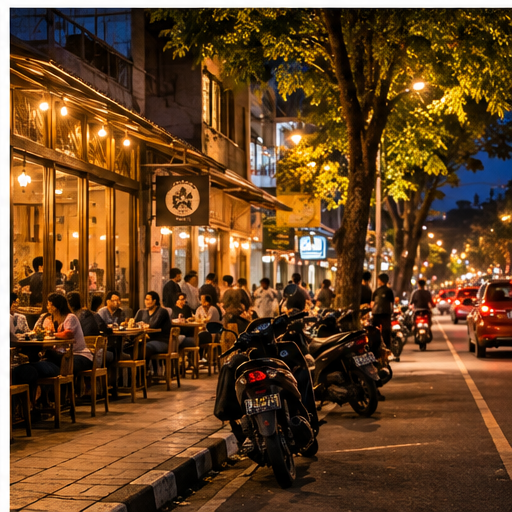
Malang doesn't require a spectacular ending: the warm lights, cool evening, and leisurely city life themselves become the end of the day.
Who should stay?
Malang is especially suitable for travellers who don't want to turn Java into a chain of transfers.
It's a good place to take a break between big impressions.
After Surabaya.
Before Bromo.
After Bromo.
Or before continuing on the road around the island.
This city is not about the maximum number of attractions.
He's talking about something else.
About restoration.
About a walk without a goal.
About a cool morning.
About the old street.
About coffee.
And about the feeling that travel doesn’t necessarily have to prove its richness every minute.
Sometimes a pause is also part of the route
A good journey needs more than just climaxes.
There needs to be spaces between them.
It's on days like these that photography ceases to be the main goal.
You start to notice ordinary things.
How the air changes after sunset.
How the tree rustles above the street.
How the rain begins.
How the cafe opposite the hotel opens in the morning.
Malang is well suited for this purpose.
He doesn't try to shout down Bromo.
Does not compete with Yogyakarta.
Not trying to become Surabaya.
He has a different character.
More calm.
Green.
Chill.
And sometimes it is precisely such a city that turns out to be the place that the route was missing.
Comments
Share your thoughts