
Riyadh: Saudi Arabia's modern capital between history and future
Riyadh is a city of contrasts, where historic quarters and traditional culture coexist with modern architecture, business districts, and large-scale urban projects.
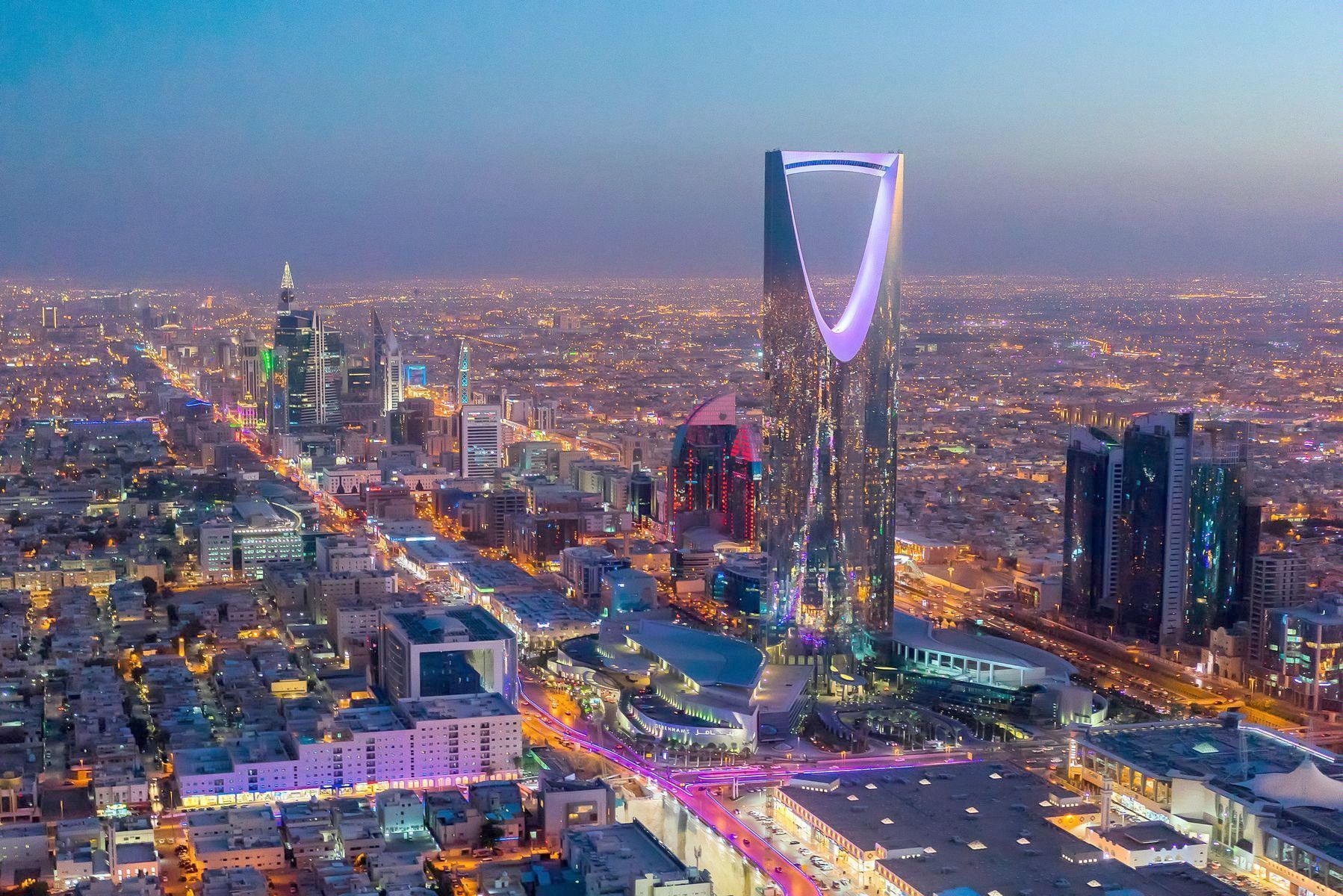
Riyadh: Saudi Arabia's modern capital between history and future
There are some cities that are best not understood from just one photograph.
Riyadh is exactly like that.
At first glance, it may seem like a huge modern metropolis: wide roads, glass towers, new districts and distances that quickly make one understand the scale of the capital.
But change the route and the character of the city changes.
Behind the modern quarters, one can discover old markets, mud-brick architecture, palaces and sites connected to the history of Saudi Arabia.
Riyadh is interesting precisely because of this contrast.
It doesn't try to appear exclusively historical, nor does it exist solely as a city of the future. Both sides are present here simultaneously.
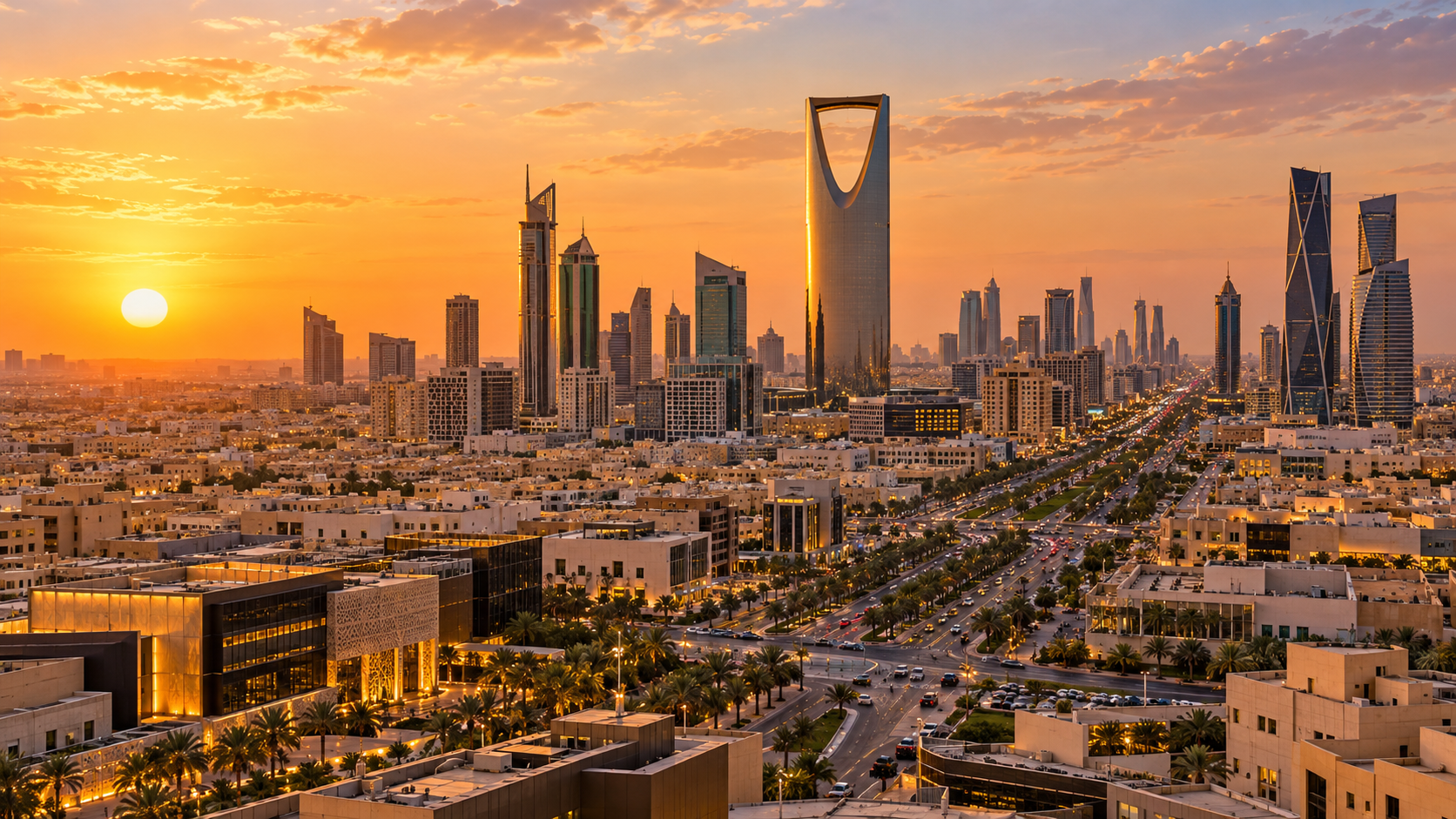
A city in the middle of the Arabian Peninsula
Riyadh is located deep in the Arabian Peninsula, far from the sea coast.
The landscape around the city appears harsh: deserted spaces, a dry climate and a huge open sky.
Against this background, the scale of the modern capital is particularly noticeable.
The city has expanded far beyond its historic center and today consists of many districts connected by major highways.
Therefore, it is better to explore Riyadh not as a compact European city, where most of the sights can be explored on foot, but as several different parts of one large capital.
Each of them shows its own Riyadh.
Diriyah – a place where history comes closer
To understand a city, it's helpful to start beyond the skyscrapers.
One of the most important historical sites is located near modern Riyadh - Diriyah.
The adobe architecture, courtyards, narrow passages and characteristic desert earth tones create a completely different sense of space.
This is especially noticeable in today's urban environment.
Here, history no longer seems like an abstract date from a guidebook. It becomes part of the landscape itself.
It's best not to try to get through the historic areas too quickly.
It's more interesting to examine such places gradually - architectural details, walls, passages between buildings, the change in light as the evening approaches.
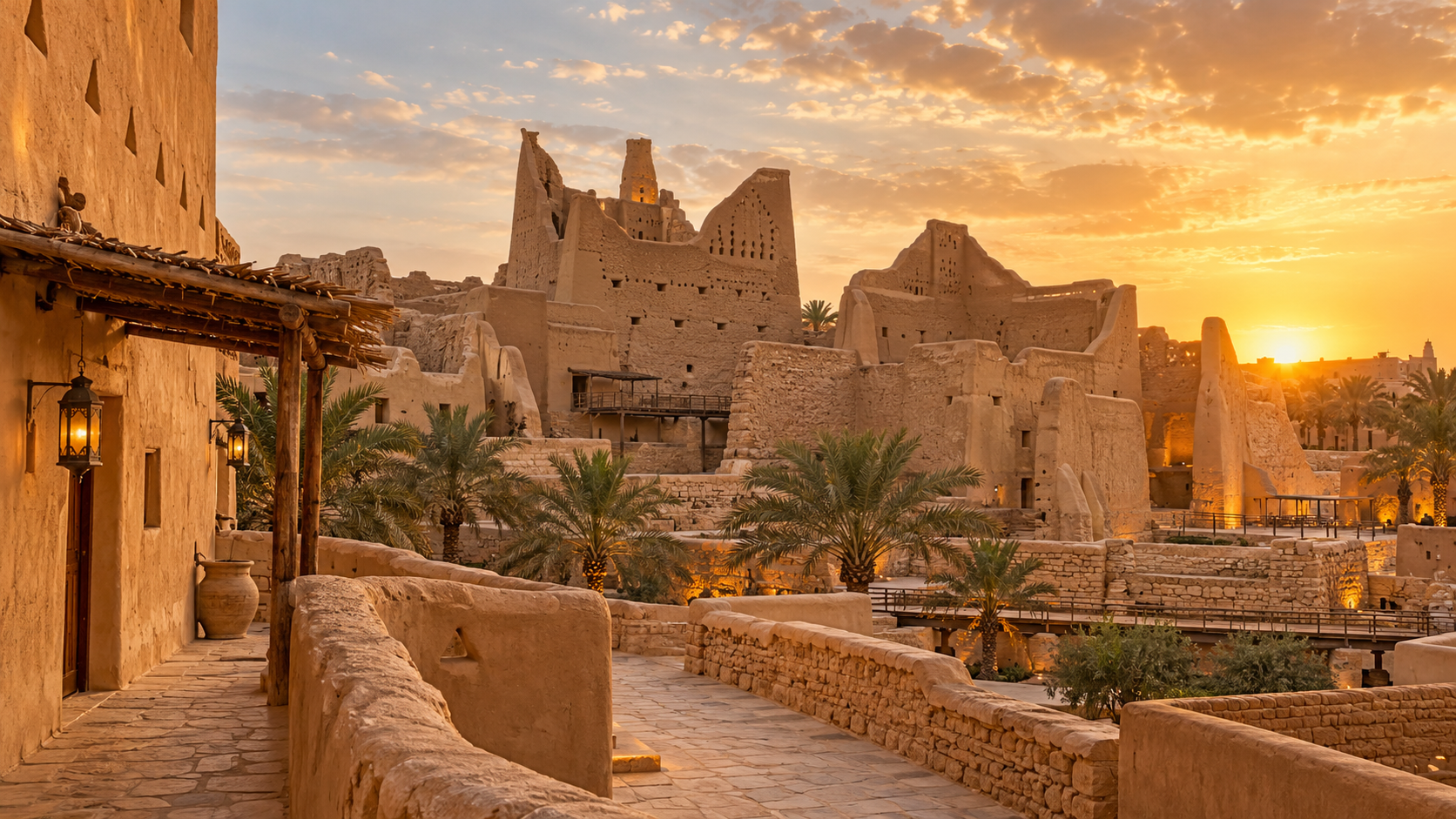
Diriyah / At-Turaif
Old Riyadh
Another side of the city opens up in the old quarters.
The atmosphere here is different from both modern business districts and new tourist areas.
Historic buildings, markets and small shopping streets give a glimpse of what the city was like before its rapid expansion.
One of the recognizable historical sites of Riyadh is the Masmak fortress.
Nearby, it is worth taking the time to visit the traditional markets.
In places like these, travel becomes more than just a matter of sightseeing.
The smell of spices, fabrics, traditional clothing, old objects, and the conversations of sellers and buyers create a layer of the city that cannot be felt through a panoramic view from above.
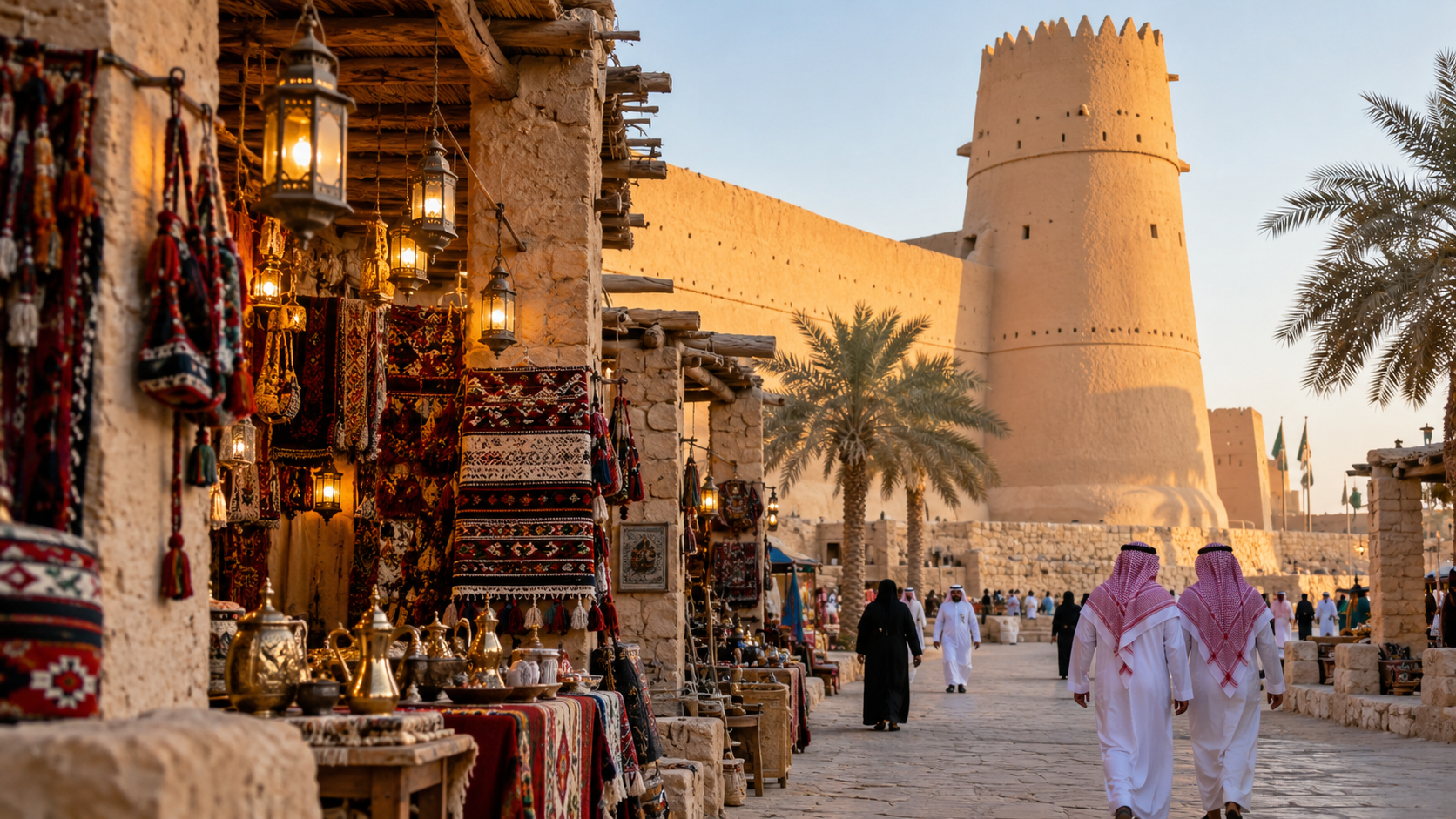
Masmak or Souq Al Zal
Riyadh of the future
Then you can completely change direction.
Modern Riyadh looks like it belongs on another journey.
High-rise architecture, new districts, business centers, and large-scale projects are shaping the capital's new image.
The contrast is especially striking after the historical quarters.
In the morning you can find yourself surrounded by traditional architecture, and in the evening you can look out at glass towers and modern urban spaces.
This is why it is more interesting to perceive Riyadh as a whole.
The old and new parts of the city do not compete with each other; they explain each other.
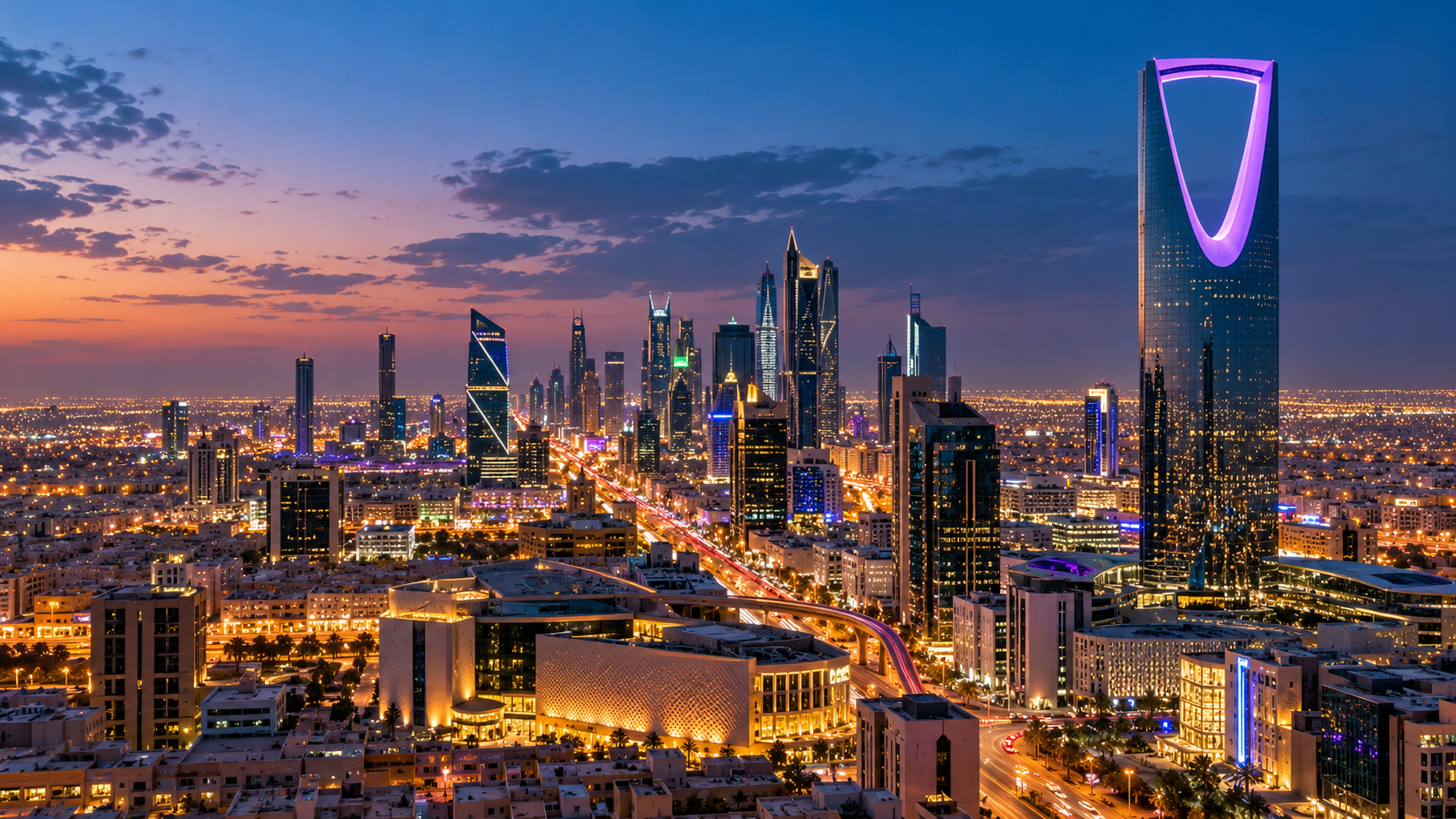
Skyline / Kingdom Centre / Modern Architecture
The city after sunset
During the day, Riyadh can appear stern and vast.
In the evening the atmosphere changes.
When the heat subsides, the city becomes noticeably more active.
Terraces are opening, restaurants are filling up with customers, streets and public spaces are coming to life.
For a traveler, this is a good time to stop moving from one attraction to another and just spend some time in the city.
Sometimes it's evenings like these that are remembered better than planned excursions.
A Taste of Riyadh
It is hard to imagine a trip to Saudi Arabia without experiencing the local cuisine.
Rice, meat, spices, bread, dates and Arabic coffee appear in a wide variety of combinations.
But the gastronomic scene of the modern capital is much broader.
Alongside traditional establishments, there are modern restaurants, coffee shops, and projects featuring cuisines from different countries.
So, one evening can be dedicated to classic local dishes, and the next to seeing what the city's modern restaurant culture has become.
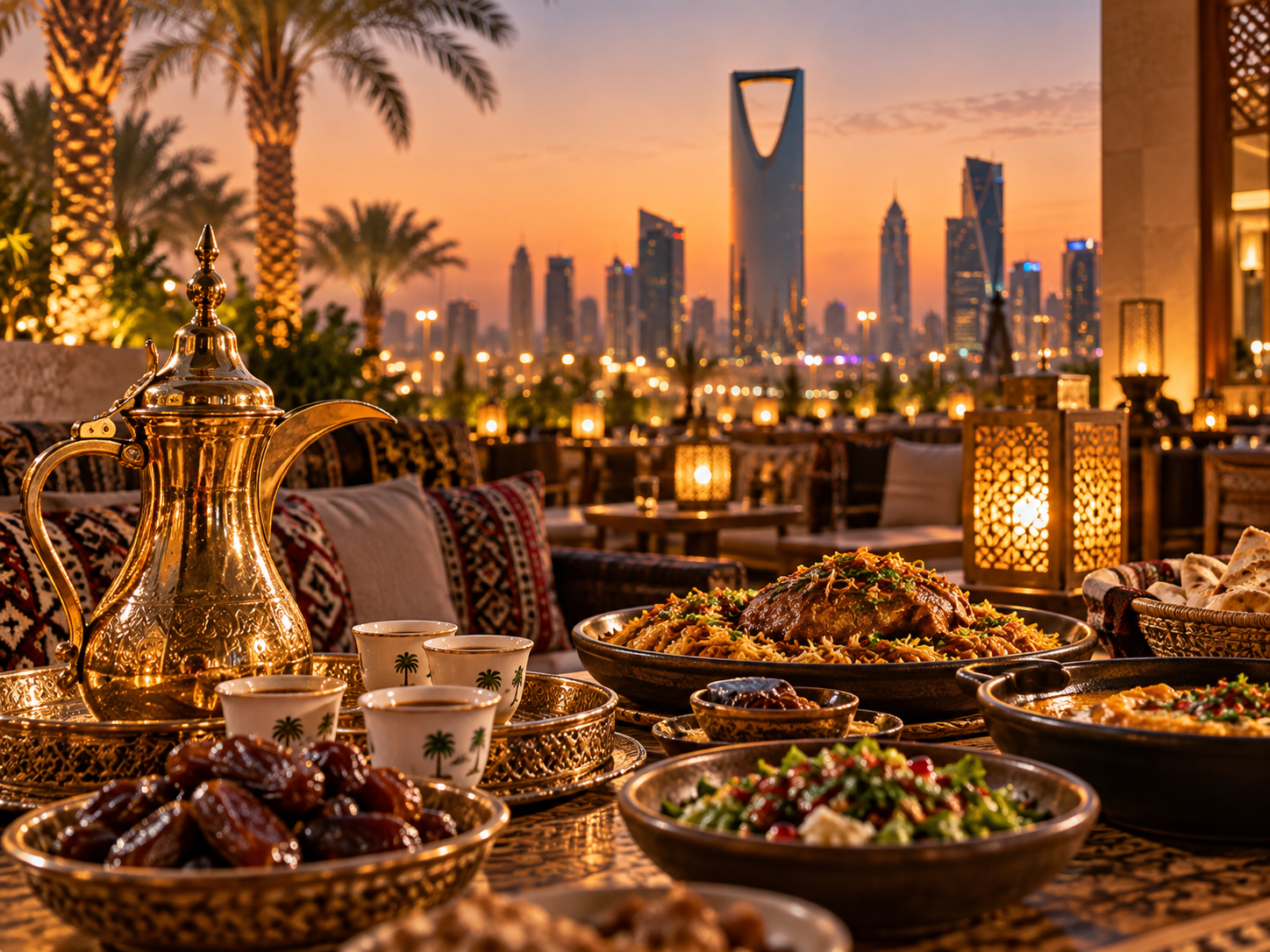
Saudi cuisine / Arabic coffee / city nightlife
Don't try to see the whole city in one day.
One of the biggest mistakes when planning Riyadh is underestimating the distances.
On a map, several objects may appear to be located relatively close to each other.
In reality, moving between areas takes time.
Therefore, it is more convenient to combine the program geographically.
One day can be devoted to the historical part.
The other is about modern districts and architecture.
Leave separate time for museums, markets, restaurants and ordinary city life.
This makes Riyadh seem much calmer.
When to arrive
For active exploration of the city, the cooler period of the year is more convenient.
During hot months, midday may not be the best time for long walks.
Then it's worth changing the rhythm of your travel: use the morning for walks and open spaces, the middle of the day for museums, restaurants, and relaxation, and return to the city again in the evening.
This is not necessarily a disadvantage.
This regime fits well with life in Riyadh itself, which reveals itself in a completely different way after sunset.
Outside the capital
Riyadh can be not only a separate destination, but also the beginning of a larger journey through Saudi Arabia.
After the modern capital, it is especially interesting to see completely different parts of the country.
Historic Al-Ula showcases desert and ancient civilizations.
Jeddah opens up a different rhythm – old Al-Balad and the Red Sea coast.
A trip to the sea completely changes the landscape after the central part of the Arabian Peninsula.
Evening Riyadh or desert landscape near the city
City of contrasts
Riyadh is not revealed by just one attraction.
His character develops gradually.
Historical architecture.
Modern towers.
Markets.
New districts.
Arabic coffee.
Deserted horizon.
And a huge city that continues to change.
Perhaps this is why Riyadh should be viewed as more than just a stopover on a Saudi Arabian itinerary.
He himself becomes part of the journey's story.
Comments
Share your thoughts