
Solo: Palaces, Batik, and the Quiet Rhythm of Central Java
Solo, or Surakarta, is one of the cultural centers of Central Java, where palace traditions, batik, markets, and everyday city life coexist without unnecessary fuss. Here, it's a wonderful place to admire not only the monuments but also the way Javanese culture lives.
It's easy to drive past a solo.
It doesn't seem like a city that tries to immediately surprise the traveler.
There is no feeling that you need to take out your camera every minute.
There is no single place around which the entire route is built.
But that is precisely his character.
Solo is a city that reveals itself gradually.
Through the palace courtyards.
Through fabric with batik patterns.
Through the old markets.
Through food.
Through music.
And through a more relaxed rhythm than that of neighboring Yogyakarta.
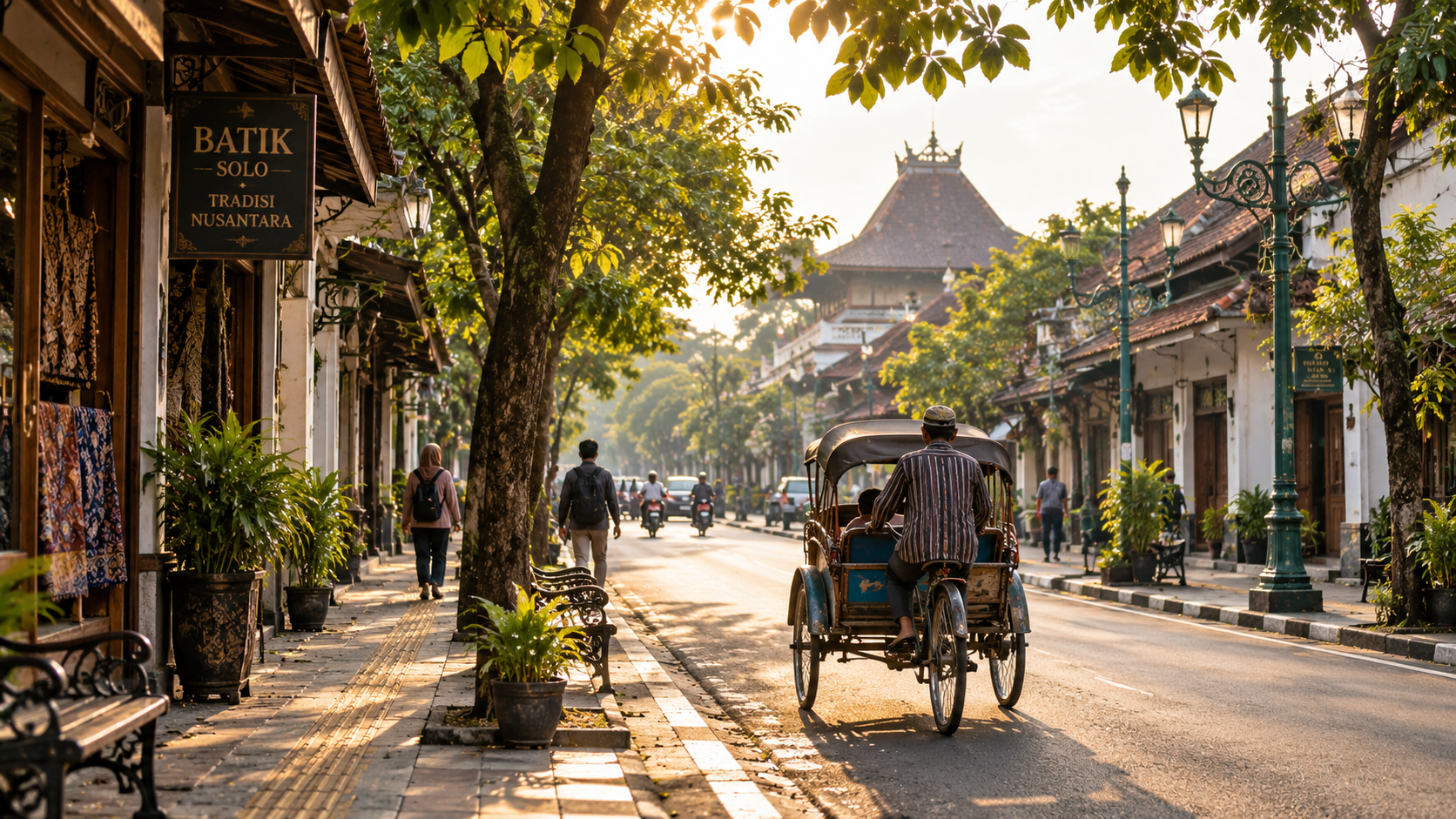
The morning in Solo begins quietly: the streets are not yet overheated by the sun, the shops are just opening, and the city looks almost intimate.
Two courtyards - two traditions
The history of Solo is closely linked to two court centers.
Keraton Surakarta.
And Mangkunegaran.
For a traveler, this is an unusual opportunity to see how different lines of palace tradition coexist within one city.
But the interest here is not only in the history of the rulers.
Palaces influenced music.
Clothes.
Dancing.
Etiquette.
Crafts.
And even on how the city perceives its own cultural identity.
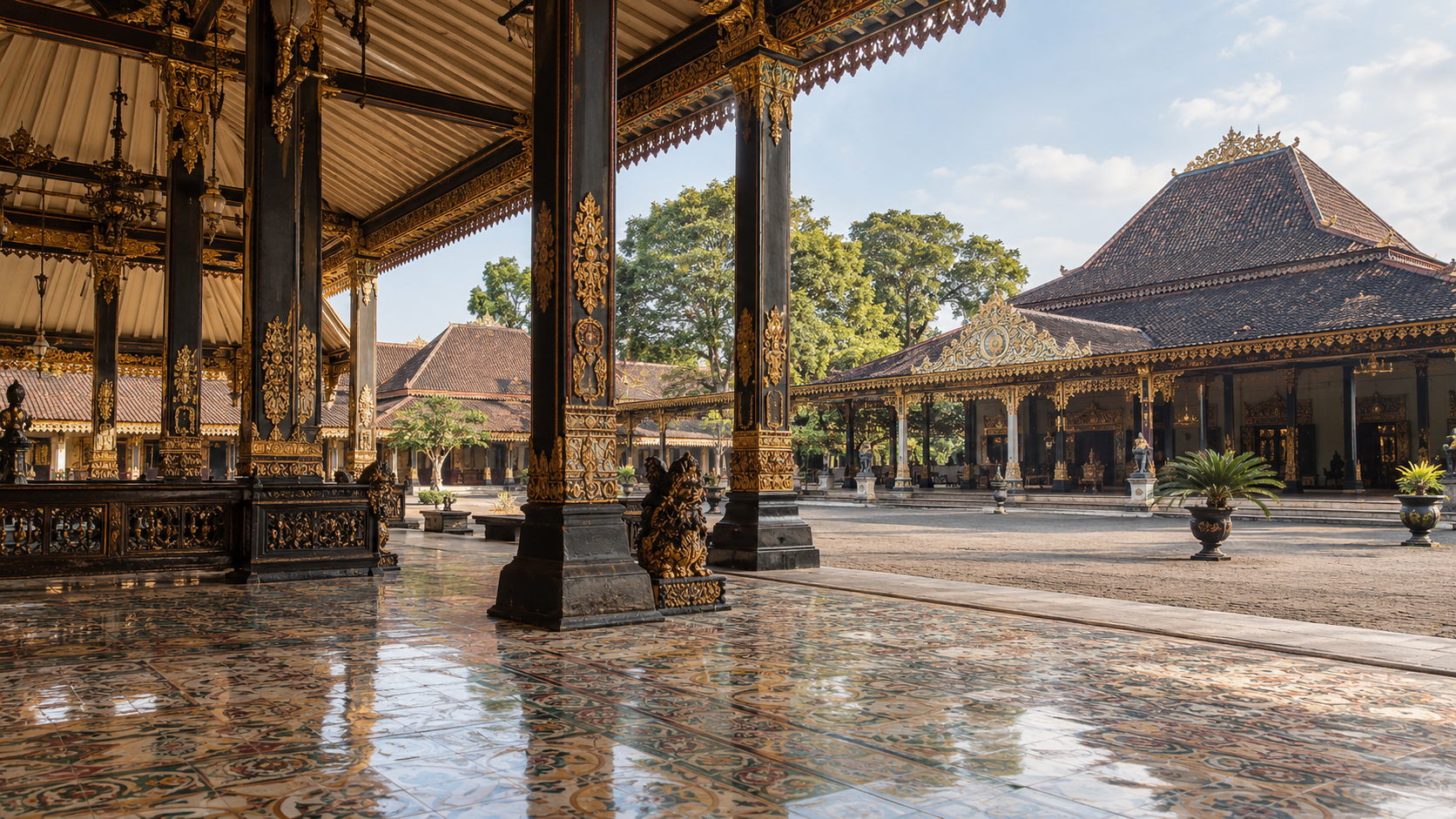
Solo's palace spaces appear restrained: open pavilions, columns, courtyards, and architecture designed not for effect but for order and ritual.
Batik as the language of the city
While batik might be seen as a souvenir in other places, in Solo it becomes part of the city itself.
It's not just the finished drawing that's important here.
It matters where it is made.
How it was applied.
What technique was used?
What motives were chosen?
Hand-made batik differs from stamped batik.
Stamped - from industrial printing.
To someone who hasn't had any previous interest in fabrics, these differences may seem minor.
But after a few workshops you start to notice them with your eyes.
The lines become clearer.
Ornaments are more meaningful.
And the fabric itself ceases to be just a beautiful pattern.
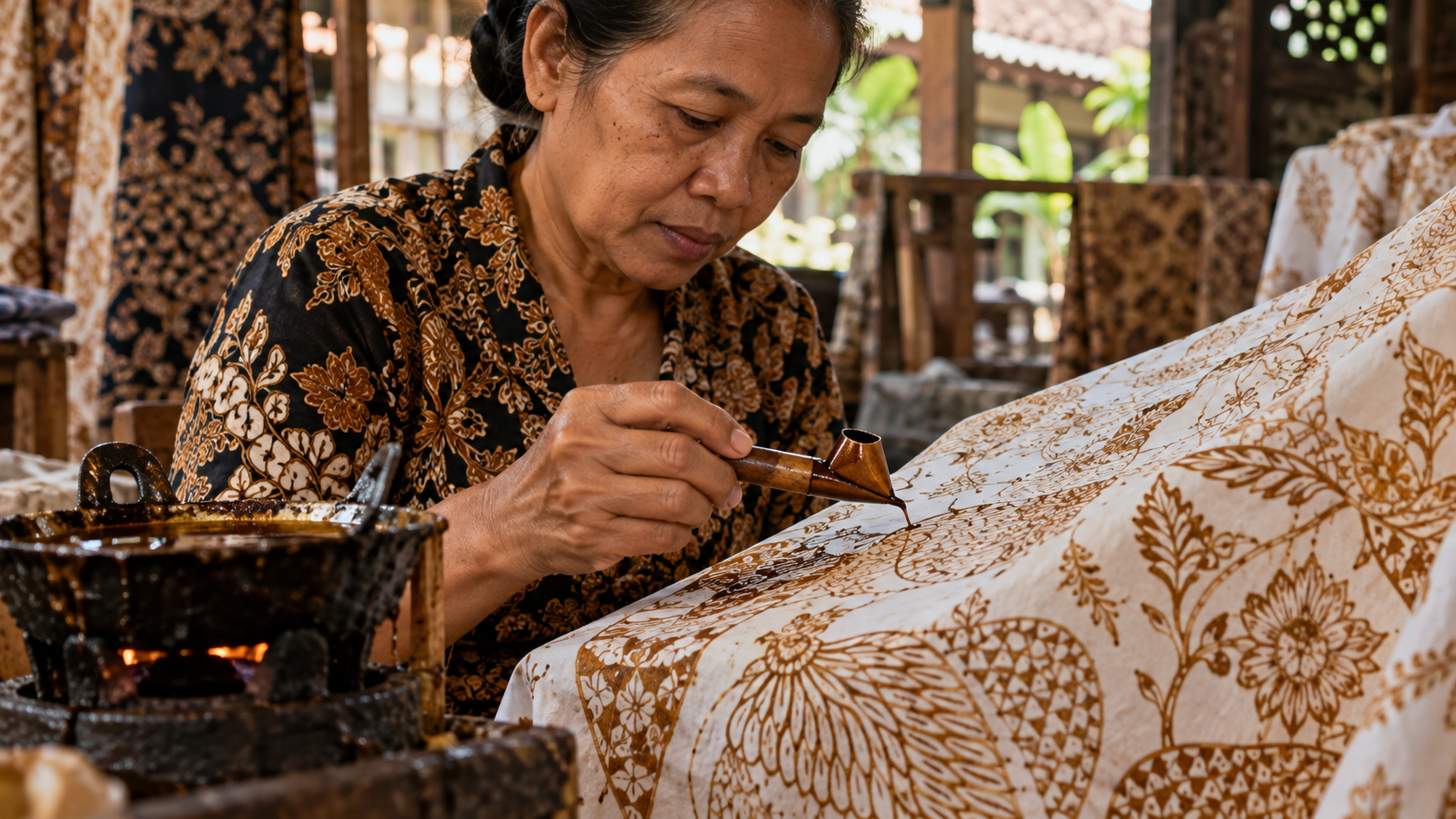
In the workshop, batik ceases to be just a drawing: each element passes through the hands of a master and becomes part of a long craft tradition.
Laweyan and Kauman
There are areas where the history of batik is felt especially strongly.
Laweyan.
Kauman.
Here you will find old houses, workshops, small shops and family businesses.
Some streets look ordinary.
But behind the gates there may be a courtyard where fabric is dyed, dried, or hand-painted.
This is why it is better not to pass through such areas too quickly.
Meaning is often not found on the main street.
And inside.
In the yard.
In the workshop.
Behind a small door without a big sign.
A market where the city reveals itself without decorations
Pasar Gede is one of those places where Solo feels particularly alive.
There is no need to look for touristic surroundings here.
There are products.
Spices.
Sweets.
Fruits.
Drinks.
Fish.
Rice.
People don't come here for photography.
They come to buy.
And that is why the market is becoming one of the best places to feel the real rhythm of the city.
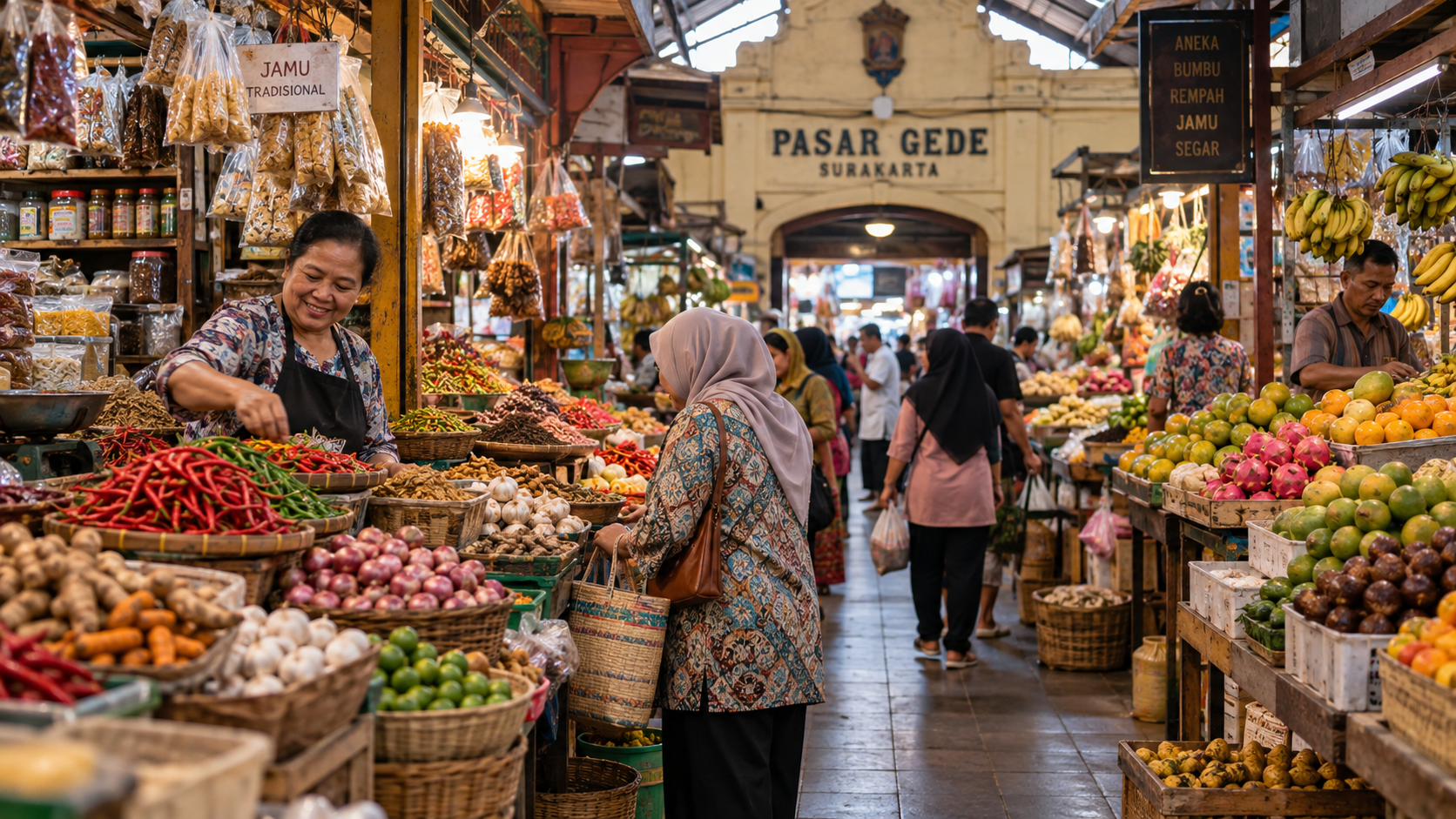
At Solo Market, culture ceases to be something relegated to the museum: it manifests itself in food, conversations, habits, and everyday purchases.
The sweet taste of Central Java
Solo's cuisine may surprise those who expect only spicy food.
Sweetness appears in many dishes.
Sauces.
Coconut.
Stewed foods.
Sweet soy sauce.
This is one of the characteristics of Central Java.
Sometimes the taste seems unusual.
But after a few dishes, its logic begins to become apparent.
The city is easily recognized through its small warungs.
There is not always an English menu.
There is not always a beautiful interior.
But often there is precisely that taste that is remembered later.
Gamelan and the silence between sounds
Music in Solo is not just an addition to the cultural program.
It is part of the palace and Javanese tradition.
Gamelan is not built on one leading instrument.
It works as a system.
The sound appears in layers.
Gongs.
Metal plates.
Drums.
Other instruments come and go.
The most interesting thing is not only the notes themselves.
But also the pauses between them.
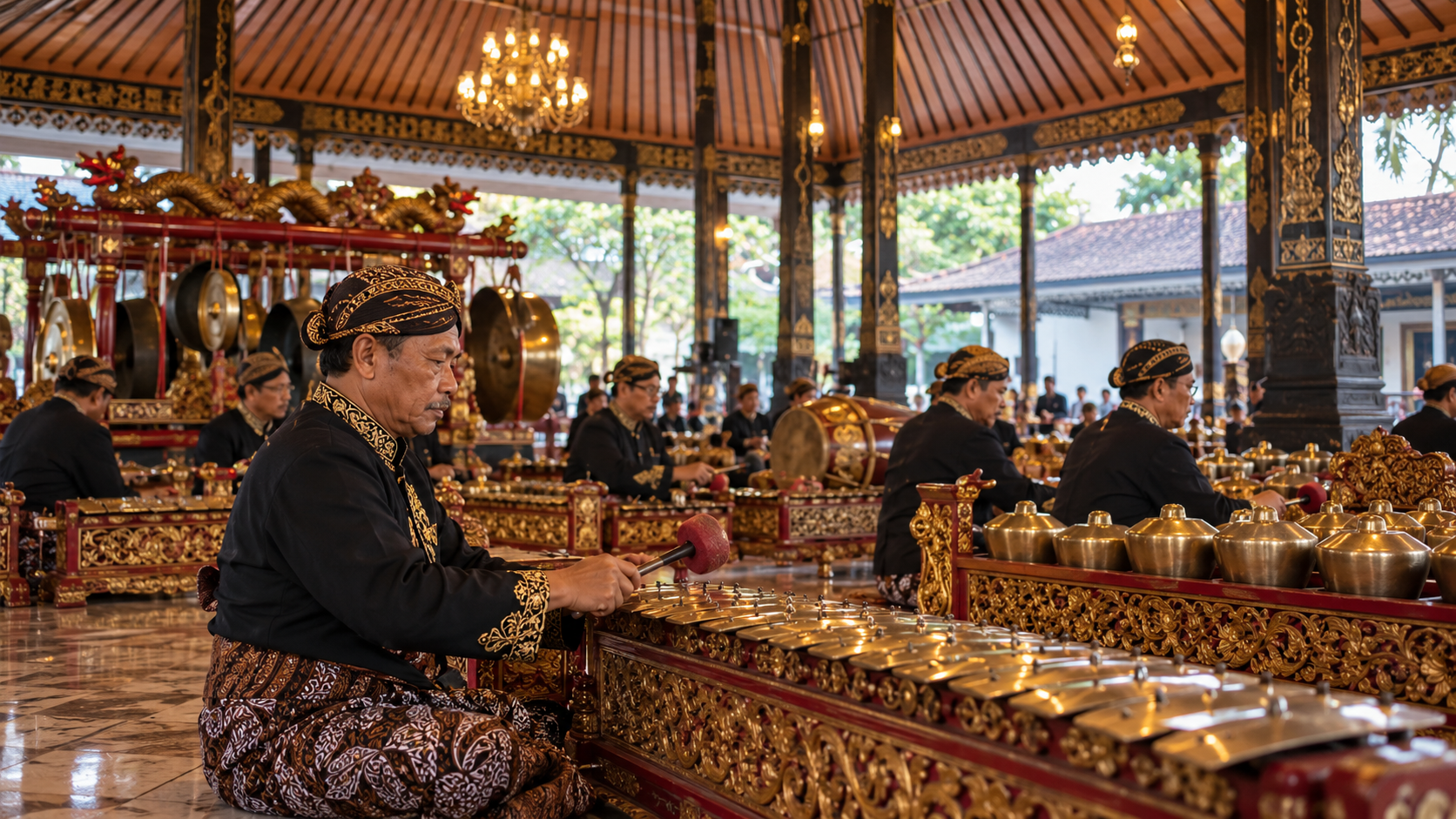
Gamelan in Solo sounds the same as the city looks: unhurried, in layers, with great attention to rhythm and pauses.
Why does Solo feel calmer?
Solo is often compared to Yogyakarta.
Comparison is inevitable.
Both cities are associated with Javanese culture.
Both have palaces.
Both are with batik.
Both are convenient for traveling around Central Java.
But the impressions are different.
Yogyakarta feels more active.
Student.
Tourist.
Solo is calmer.
It's easier to spend a day here without constantly moving between landmarks.
This is precisely what could become his advantage.
A city without the need to prove anything
There are cities that constantly remind the traveler how significant they are.
Solo almost never does this.
He doesn't demand admiration.
You can just walk down the street.
Go to the market.
See how batik is made.
Drink some tea.
Sit in becak.
Return to the palace.
And all this will be part of one city, and not separate tourist episodes.
Evening Solo
When the heat subsides, the city changes again.
More people are appearing on the streets.
Food outlets are opening.
Markets continue to live.
Groups gather at small cafes.
It becomes more pleasant to walk.
The light from the signs blends with the old architecture and ordinary residential streets.
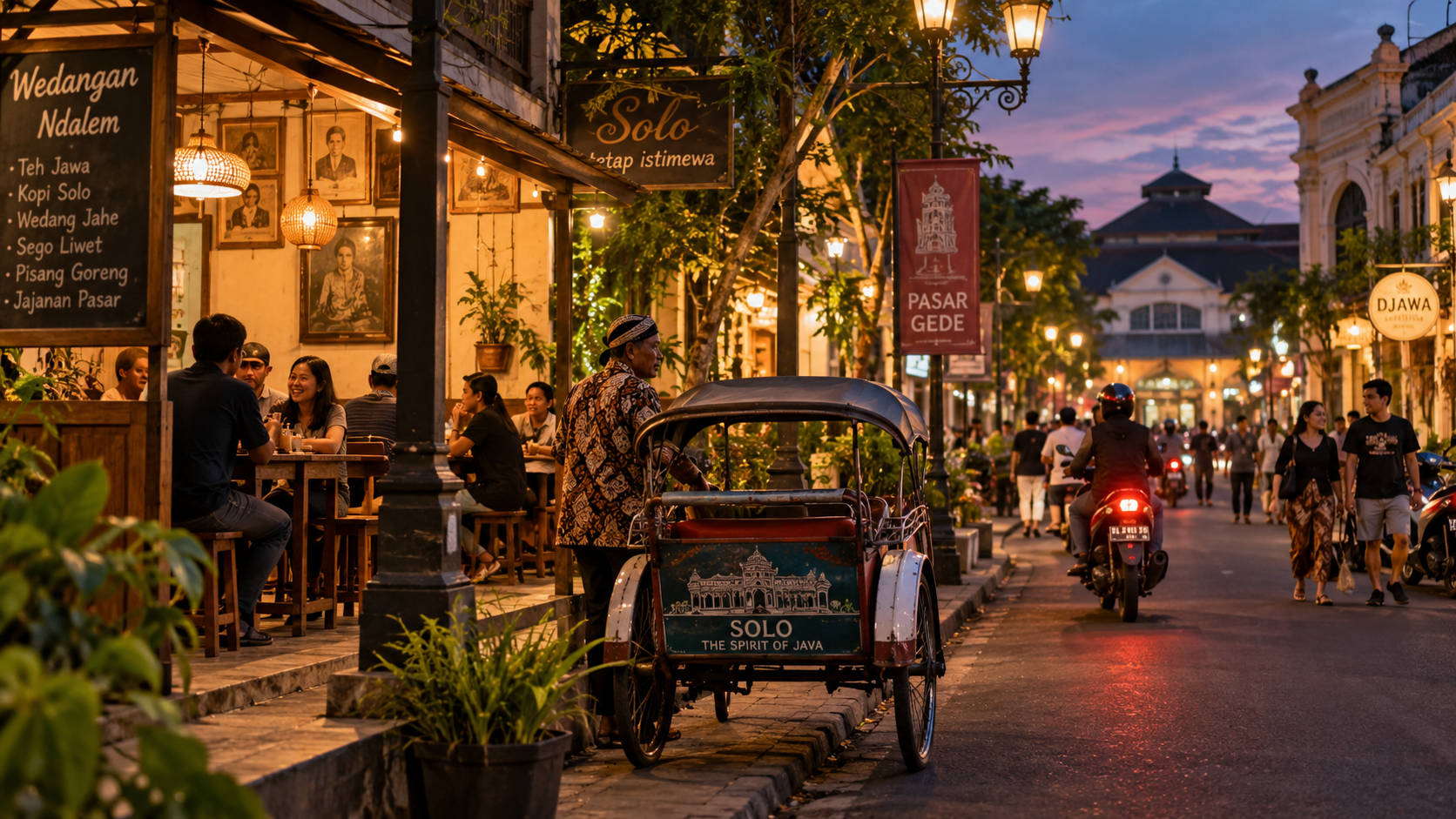
In the evening, Solo becomes especially cozy: the city doesn’t turn into a show, it simply continues to live – a little slower and softer than during the day.
Solo as part of a Central Java itinerary
The city is conveniently located between Yogyakarta and the eastern part of Java.
You can get here by train.
Spend one or two days.
See the palaces.
Walk through the batik districts.
Eat at the market.
And then continue the route further.
But the main thing is not to perceive Solo as just a stopover along the way.
He has enough character of his own.
What remains after the trip
Solos don't always make the biggest impact.
But it remains well in the memory.
With the fabric I saw in the workshop.
The sound of the gamelan.
Shadows in the palace courtyard.
The smell of food at the market.
Quiet street in the morning.
And the feeling of a city where culture is not separated from life.
It just keeps going.
Comments
Share your thoughts