
Yogyakarta at its best: Batik, palaces, markets, and the rhythm of Java's cultural capital
Yogyakarta reveals itself not through a single landmark, but through a multitude of details: the sound of gamelan, batik patterns, palace courtyards, the aromas of street food, and the evening traffic on Malioboro. It's a city best experienced gradually, not by sightseeing.
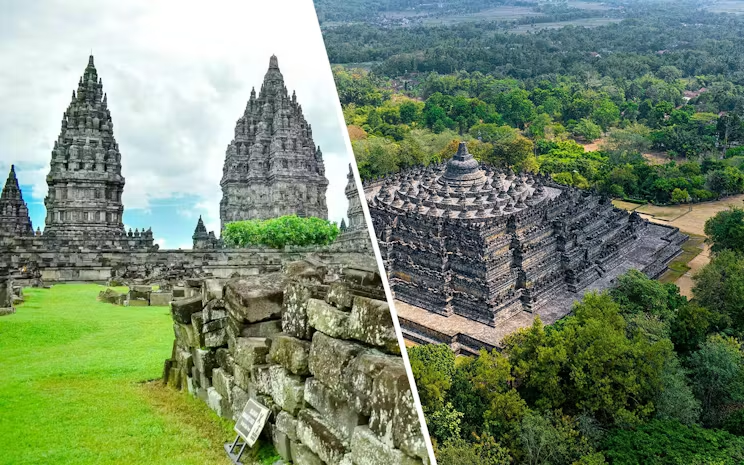
Yogyakarta doesn't give the impression of being a city that tries to please at first sight.
She does not greet the traveler with one grandiose symbol.
Everything works differently here.
First you notice the scooters.
Then street stalls.
Then there are old facades, palace walls, workshop signs and fabric with batik patterns.
After a while you start to hear the city.
Gamelan.
Market noise.
Voices of sellers.
The sound of rain on the roof.
And then it becomes clear why Yogyakarta is called one of the cultural centers of Java.
It is not revealed through one object.
It consists of dozens of small scenes.
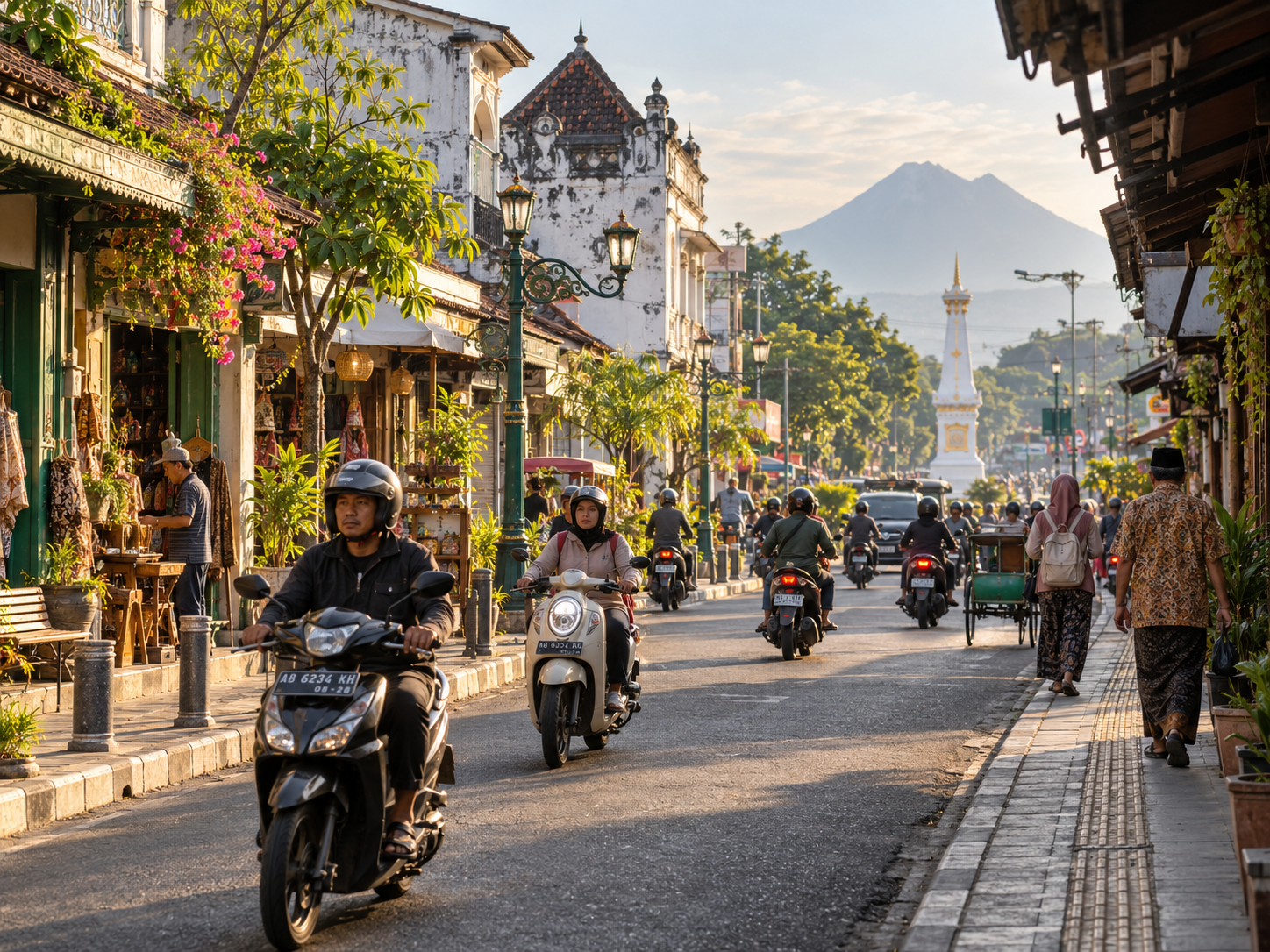
Mornings in Yogyakarta begin not with silence, but with movement: the city awakens gradually, a mixture of old facades, scooters, shops, and the first smells of food.
A city that's best read like a book
It's easy to make mistakes in Yogyakarta.
Come.
See the palace.
Go to Borobudur.
Visit Prambanan.
And decide that the city is understood.
In fact, the most interesting moments often happen between these points.
In a small workshop.
In the courtyard of an old house.
At the market.
In a cafe.
On the street, where someone is painting batik with wax by hand.
Yogyakarta doesn't require constant movement.
She demands attention.
Kraton is more than just a palace
The Sultan's Palace, or Kraton, remains an important part of the city's culture.
But his interest is not only in architecture.
This is not a museum, completely separated from modern life.
The palace tradition continues to influence the cultural image of the city.
Inside, there are pavilions, courtyards, decorative elements and spaces where the Javanese aesthetic is particularly well felt.
She is rarely loud.
Proportions are important here.
Pauses.
Shadow.
Open passages.
Symmetry.
Sometimes the most powerful impression is not made by a single object, but by the atmosphere of the space itself.
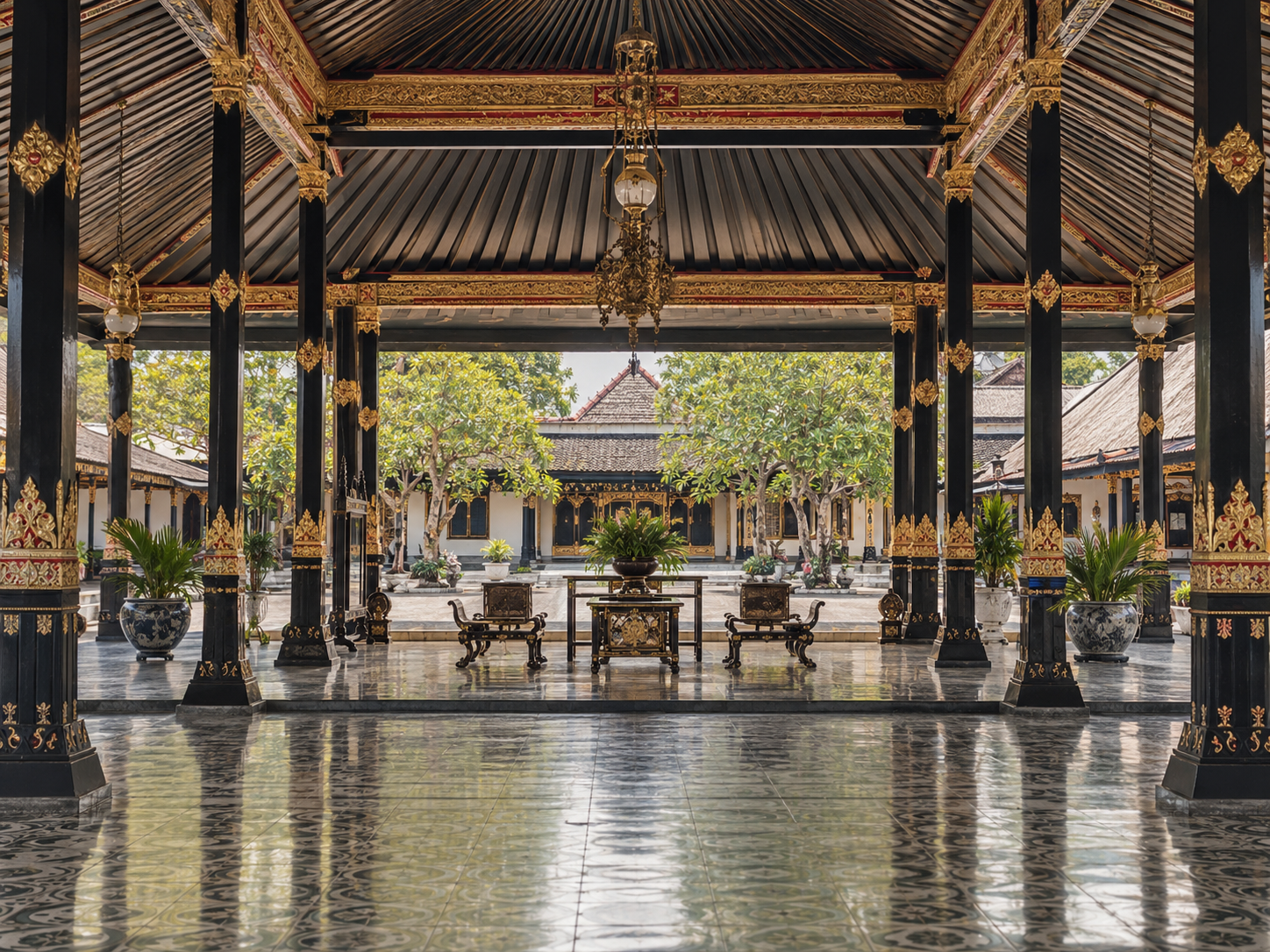
In Kraton, attention gradually shifts from individual sights to details—columns, shadows, open courtyards, and the calm rhythm of traditional Javanese architecture.
Batik begins with a line
On the finished fabric, batik looks almost natural.
It's hard to imagine how much work goes into a drawing.
But once you see the process, the fabric begins to be perceived completely differently.
First, a drawing appears.
The technician then applies hot wax.
Fine line after line.
After this, the fabric is dyed.
Part of the surface remains protected with wax.
The process can be repeated over and over again if the design requires multiple colors.
This is slow work.
And it's precisely the slowness that makes it interesting.
In the workshop, the difference between hand-made batik and mass-produced printing is particularly visible.
They may look similar from a distance.
But up close, the master's hand reveals itself through small imperfections.
They are the ones who make things come alive.
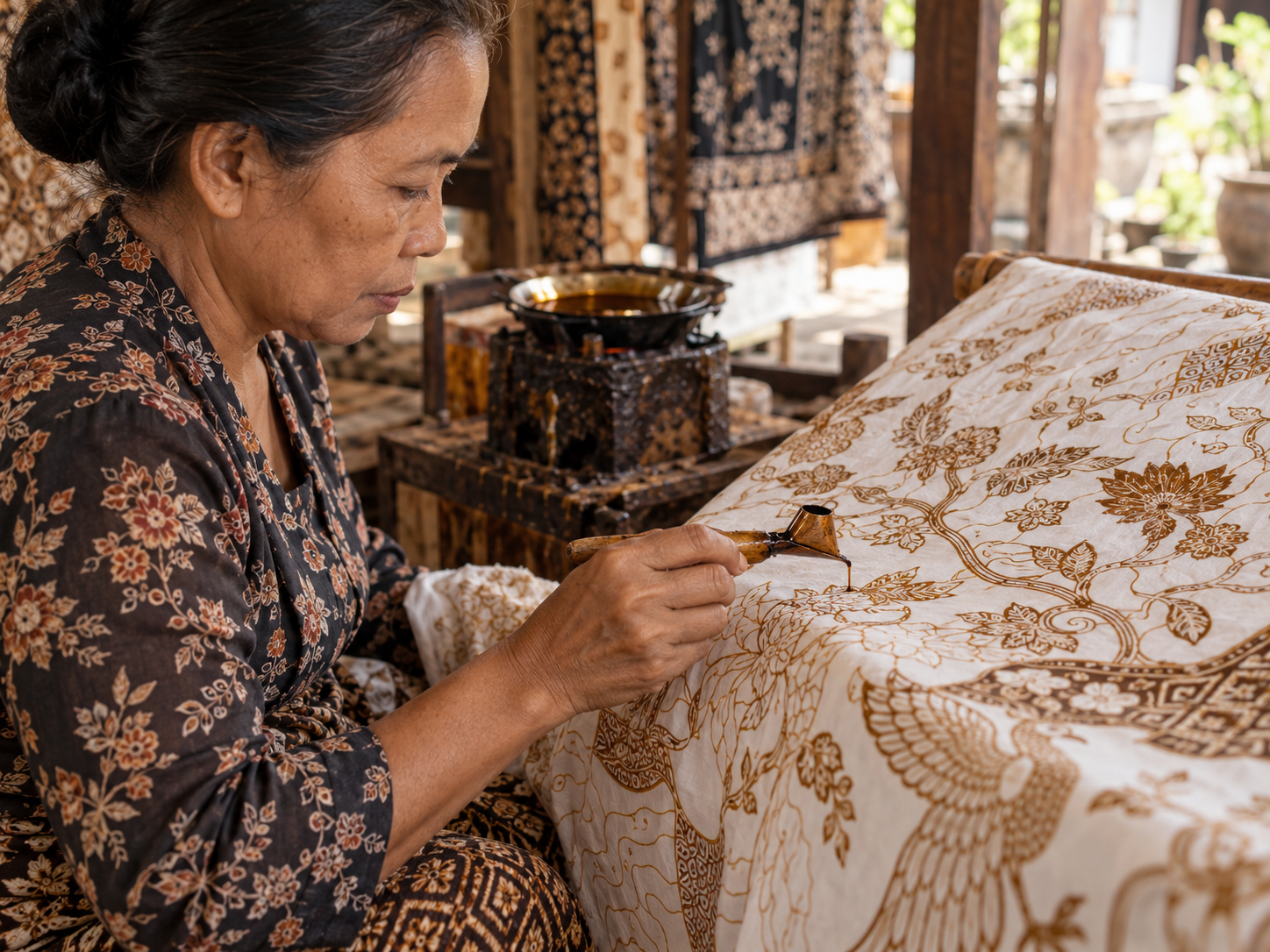
Hand-made batik is literally created on the line: the artist applies hot wax to the fabric, leaving a design that will only appear after subsequent dyeing stages.
The market as a portrait of the city
If the palace shows the official side of culture, the market shows the everyday side.
Everything is much denser here.
Colors.
Fabrics.
Spices.
Fruits.
Baskets.
Cloth.
Conversations.
At the market, Yogyakarta ceases to be an abstract “cultural capital” and becomes an ordinary, living city.
It's better not to come here just for shopping.
Sometimes it's much more interesting to just watch.
How to choose products.
How to bargain.
How to fold fabric.
How a salesperson prepares a drink for a regular customer.
A tourist trip gradually turns into an observation of city life.
Malioboro is a street that changes in the evening.
During the day, Malioboro may seem overly active.
Shops.
Transport.
People.
Signs.
The flow is almost constant.
But in the evening the street becomes different.
More food appears.
Street vendors take their places.
The light becomes softer.
People go out for a walk.
And Malioboro is no longer just a shopping street, but a unique urban scene.
You don't have to look for a specific place here.
Just go.
Stay.
Try something from the street food.
Look at people.
And then continue further.
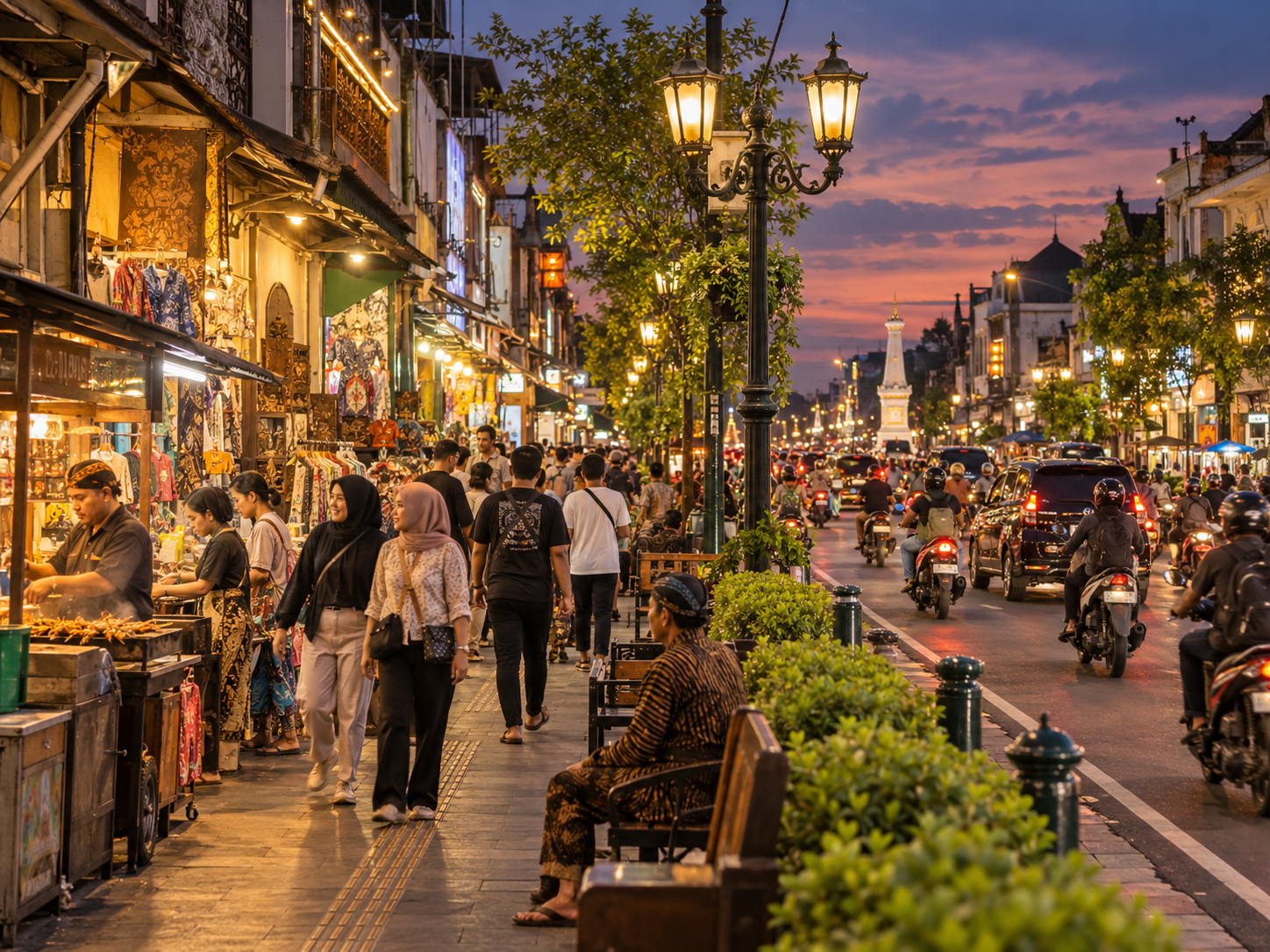
After sunset, Malioboro is no longer just a shopping street: the lights, the smell of food, and the evening stroll transform it into one of the most vibrant spaces in the city.
A Taste of Yogyakarta
Some cities are more easily remembered through their architecture.
Yogyakarta is often remembered through its food.
One of the local dishes that constantly comes up in conversations about the city is gudeg.
It is made from young jackfruit, which is stewed for a long time with spices and coconut milk.
The taste is slightly sweet, which is unusual for those who expect spiciness from Indonesian cuisine.
But the city's cuisine is not limited to this.
Street food.
Small family cafes.
Rice.
Chicken.
Sambal.
Tea.
Coffee.
All this becomes part of the route no worse than museums.
Sometimes the best evening is not the one where you manage to visit another attraction, but the one where you accidentally find a small place with good food.
The sound that remains after the ride
Javanese culture has its own rhythm.
It can be heard clearly in the gamelan.
Metal instruments create a sound that is difficult to confuse with anything else.
It may appear calm.
Almost meditative.
But the longer you listen, the more you begin to notice the layers.
Some tools set the foundation.
Others add movement.
Others appear almost unnoticed.
For a traveler, this is one of the ways to experience a culture not through the eyes, but through sound.
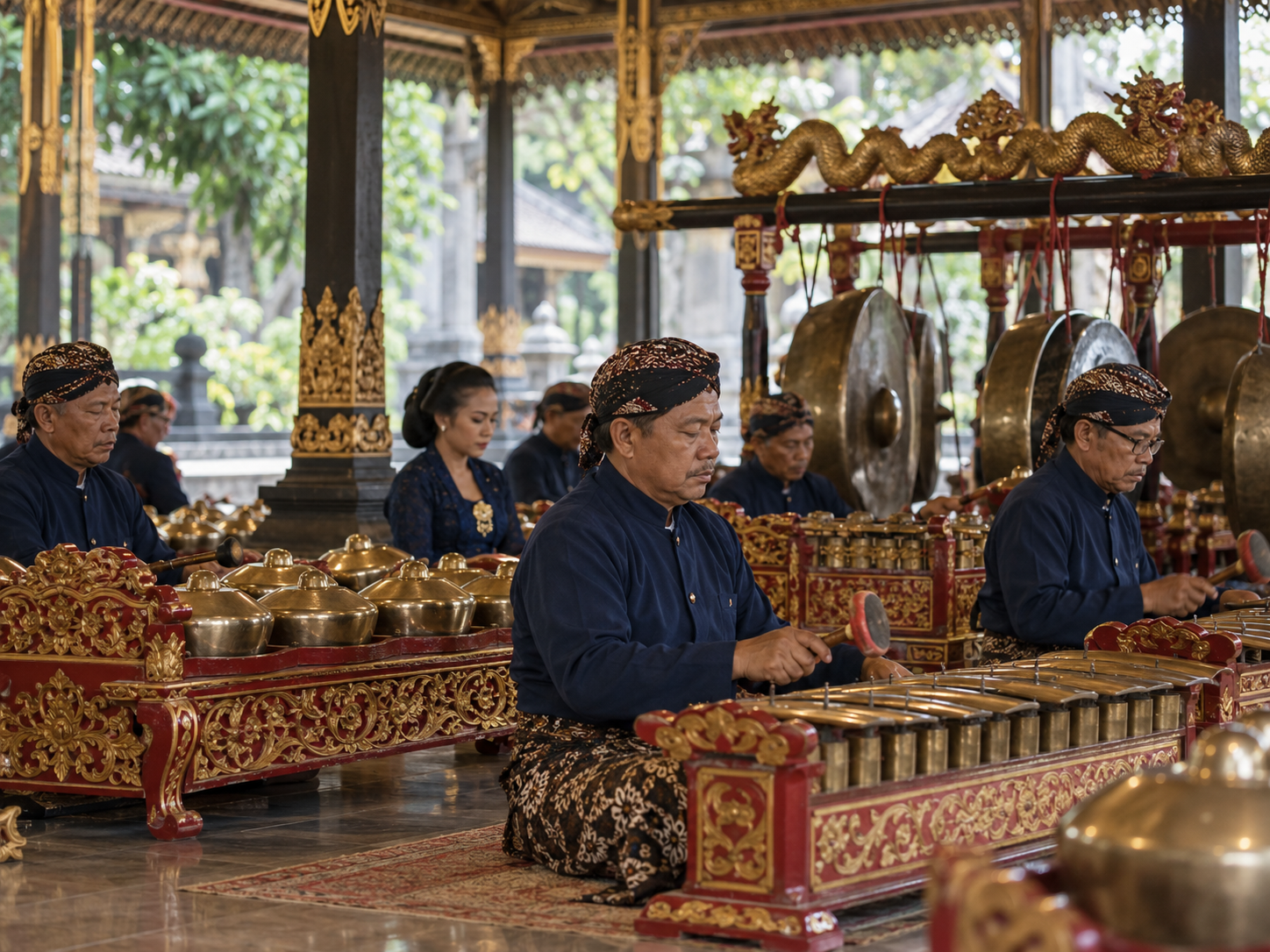
Gamelan cannot be captured in a single photograph, but the scene itself speaks volumes about Java: the musicians sit close together, and the metal instruments create a complex rhythm that gradually fills the space.
Borobudur and Prambanan are close, but not a substitute for the city.
Borobudur and Prambanan are often the main reasons for visiting this region.
And this is understandable.
Both complexes deserve separate time.
But there is an important difference between “going to Yogyakarta for the temples” and “seeing Yogyakarta first and then the temples.”
In the second case, the journey becomes much richer.
It is better not to turn the city into just a hotel base.
Leave him at least one full day.
No long trips.
No early transfer.
Without the task of closing the maximum number of points.
It is on such a day that the true image of Yogyakarta is often found.
Rain is also a part of Java
Tropical rain can easily change plans.
Especially if the program is built to the minute.
But in Yogyakarta, rain sometimes works in favor of travel.
The street comes to a standstill for a few minutes.
People are hiding under awnings.
The air is getting cooler.
After a while, everything starts moving again.
If your trip falls during a wet period, it's best to view such breaks as part of the day, rather than as a disruption to it.
The city is not disappearing.
It just sounds different for a while.
A day without a list
One of the best ways to spend time in Yogyakarta is to take at least a few hours off the list.
Select a district.
Go on foot.
Go somewhere interesting.
Stop at the workshop.
Drink coffee.
Look at the old house.
Talk to the seller.
Find a food whose name you haven't seen before.
This seems like too simple a program.
But it is precisely these days that are often remembered better than busy excursions.
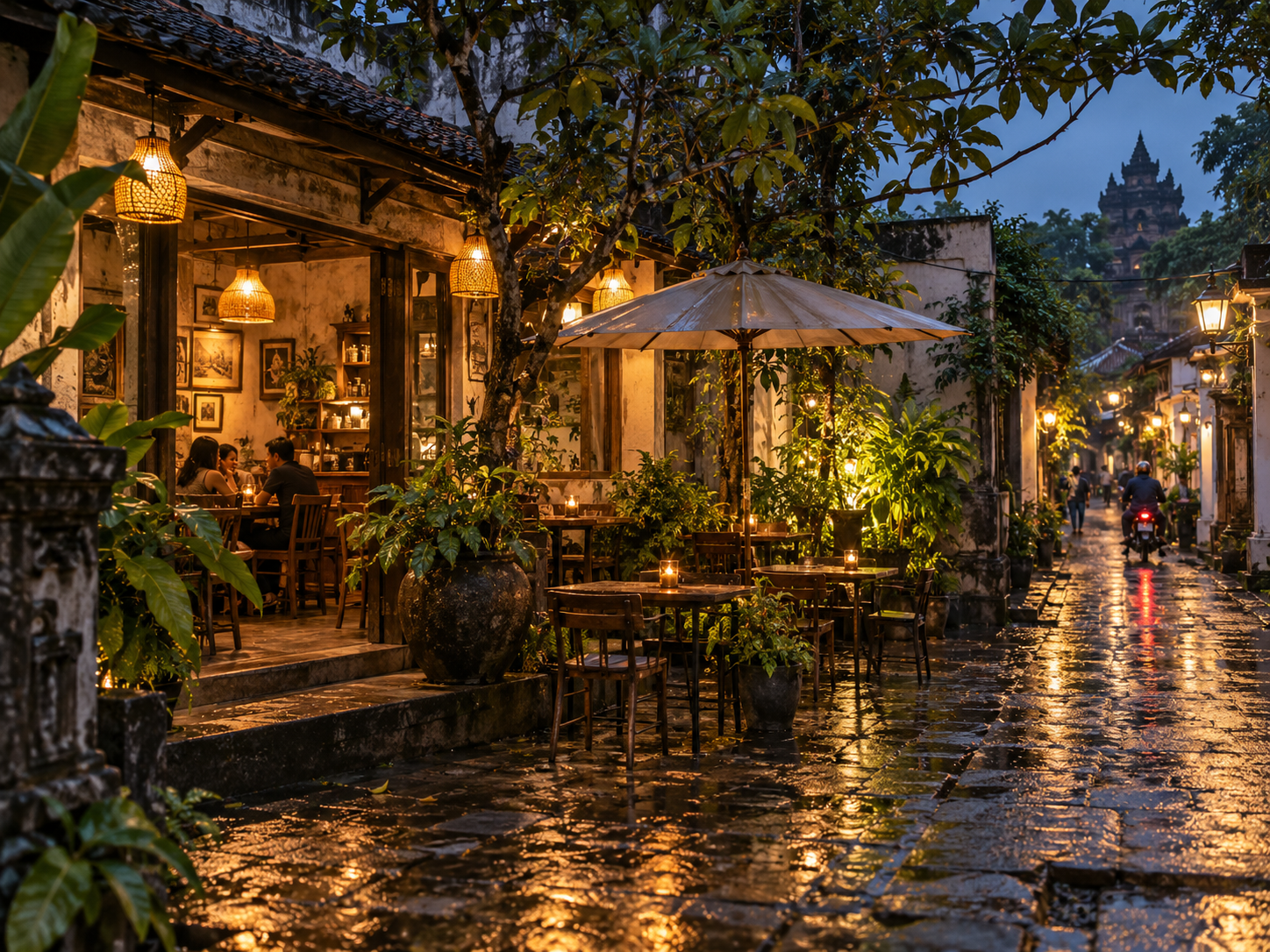
After the rain, the city becomes quieter: the wet asphalt reflects the light, the air is cooler, and an ordinary cafe or courtyard suddenly turns into one of the most atmospheric scenes of the trip.
Yogyakarta remains in the details
After the trip, it is difficult to choose one main impression.
Craton?
Batik?
Malioboro?
Gamelan?
Food?
The answer is probably all of these.
Because Yogyakarta works precisely as a combination.
It doesn't require a grand finale.
The city gradually comes together in memory from small details.
Fabric pattern.
The sound of metal instruments.
Warm light in the evening.
Rain.
Market.
The smell of food.
A conversation with a person whose name you won’t remember in a year.
And perhaps that is why you want to come back here.
Not for the sake of one place.
But for the sake of the very feeling of the city.
Comments
Share your thoughts